Quantum International Frontiers 16-19 October, 2026,
Changsha, Hunan Province, P.R. China.
On the occasion of the 88thAnniversary of the founding of
Hunan Normal University.
About Quantum International Frontiers 2026
Quantum International Frontiers 2026 will include sessions on:
- Session titles:
- Microcavity photonics and Quantum Sensing
- Quantum Modelling for Energy Conversion and Storage
- Developments in Theoretical Quantum Chemical Physics
- Plasmas and Particles in Chemistry and Physics
- Molecular and Nano-materials for Electronics
- Quantum Effects and Applications
- Relativistic Effects for Quantum Chemistry
- Spectroscopy, Molecular Structure and Dynamics
- Quantum Frontiers and Green Chemistry (量子前沿与绿色化学)
- Catalysis, Reactive Collisions and Chemical Reactions
- Surfaces and Interfaces of Complexes and Clusters
- Atoms and Molecules in Strong Fields
- Developments in Theoretical Concepts in Quantum Chemistry
- Macromolecular chemistry synthesis, assembly and properties
Traditional and non-traditional lecture formats and poster sessions will be implemented in this conference.
- Invited lecture: 30 minutes (25 minutes talk, 5 minutes for questions)
- Cheol Ho Choi: MRSF-TDDFT and Beyond
- Shamik Chanda: From Benchmark Accuracy to Production-Level Computation of Excited States with Spin-Adapted Multireference Theories
- Xiaoyan Cao: New Developments and Applications of Relativistic Energy-consistent Pseudopotentials
- Elfi Kraka: From Phonon Bands to Bonds: Wavevector-Resolved and Wannier-Type Local Vibrational Mode Analysis
- Libor Veis: Projection-Based DMRG-in-DFT Embedding for Strongly Correlated Molecular Systems
- Ma Haibo: Simulating spectroscopy and ultrafast dynamics in strongly correlated systems
- Sidian Li: Fluxional Covalent Bonds, Hydrogen Bonds, and Halogen Bonds in Chemistry
- Michael Dolg: Investigation of medium-sized methane clusters with quantum chemical first principles and ab initio calculations
- Timothy Hele: A Radical Approach to Machine Learning and Electronic Structure Theory
- Keyu Xia: Singularity-enhanced sublinear sensing with linear sensors
- Peifeng Su: A Low-Scaling Tensor Decomposition Framework for Accurate Electronic Structure: Block Tensor Decomposition and its Applications in Electron Correlation Methods
- Wenjie Dou: Memory kernel coupling theory to quantum dynamics
- Jianqi Zhang: Experimental witness of quantum jump induced high-order Liouvillian exceptional points
- Yasuteru Shigeta: An Integrated Computational Chemistry Workflow for Drug Discovery and Protein Function Analysis
- James Anderson: The Impact of Scalar Relativity and Electron Correlation on QTAIM Properties
- Yang Guo: Multi-reference Methods for Large Active Spaces and Relativistic effects
- Wang Xiguang: Electrically tunable non-Hermitian magnon propagation in magnetic waveguides
- Michał Lesiuk:
- Mikhail V. Polynski:
- Sergey Kozlov:
- Sławomir J Grabowski:
- Troy van Voorhis:
- Wenning Wang:
- William Glover:
- Xiao Yuan:
- Yonggang Yang:
- Dongping Zhong:
- Ireneusz Grabowski:
- Cristina Trujillo del Valle:
- Xiguang Wang:
- Jin-Lei Wu :
- Fernando Buendia Zamudio :
- Elena Besley:
- Pedagogical lecture: 45 minutes: The lecture material (PPTs, PDF) must be at a level suitable for final year undergraduate students and the audience may interrupt the speakers. There should be no jargon or unexplained acronyms. Limited numbers of slots available.
- Dongqing Wu:AI drugs with quantum computing
- Maxim Gelin: Femtosecond nonlinear spectroscopy from the point of view of a theoretician.
- John M. Herbert: Large-Scale, High-Accuracy Quantum Chemistry via Fragmentation
- Jonathan Hirst:
- Julia Contreras-García:
- Helin Maksim:
- Frontier lecture: 60 minutes: 30 minutes invited talk immediately followed by 30 minutes of audience discussion. The lecture material should be of a pedagogic level and submitted by 2026/08/01 for distribution to the Q.I. Frontiers audience. Limited numbers of slots available.
- Pavlo O. Dral: AI Scientists for Quantum Chemical Simulations
- Hiro Koizumi:
- Hong Jiang:
- Tomasz A Wesolowski:
- Zhonghan Hu:
- Zhongyu Liu: Equation-of-motion method and simulation of six-wave-mixing signals of excitionic trimer
- Raj Roy: Radiosensitizing potential of halo-uracils via low-energy electrons: A simulation study
- Alireza Lashkaripour: Quintet Mixed-Reference Spin-Flip (QMRSF) Theory: A New Framework for Strong Correlation
- Bahodurov Janobiddinkhuja: Interfacial Design Rules for Oxide/Metal Composite Catalysts: A DFT Screening for Water Splitting and CO2 Reduction
- Xinmiao Li: Theoretical study of internal conversion through the prism of six-wave-mixing spectroscopy
- Weixi Wu: Exploring Singlet Fission Characteristics via Simulations of Six-Wave Mixing Spectroscopy
Posters
Important Deadlines
- Deadline 1: 2026/04/30 Early bird registration - see below..
- Deadline 2: 2026/09/01 Abstract submission deadline.
- Deadline 3: 2026/09/20 Late registration - see below.
Mark up your calendars!
Quantum International Frontiers 2026 will be hosted by Hunan Normal University, specifically:
- The Quantum Optics Lab of the Chinese Department of Education
- The Key Laboratory of Low-Dimensional Quantum Structures and Quantum Control of the Ministry of Education
- The Synergetic Innovation Center for Quantum Effects and Applications (SICQEA)
- The College of Chemistry & Chemical Engineering
QI Frontiers 2026 will be located in Changsha, capital city of Hunan Province.
Invited speakers
| Dominika Zgid | Piotr Piecuch | Libor Veis |
| George Booth | Francesco Evangelista | Pierre-Francois Loos |
| Karol Kowalski | Markus Reiher | Cyrus Umrigar |
| Katharina Boguslawski | Monika Musiał | Ireneusz Grabowski |
| Rafał Podeszwa | Krzysztof Szalewicz | Claudia Filippi |
| Yang Guo | Shuhua Li | Zhigang Shuai |
| Michał Lesiuk | Agnes Szabados | Sandeep Sharma |
| Peter Nagy | Julia Contreras-Garcias | Alex Wang |
| Marco Nascimento | James Anderson | Slawomir Grabowski |
| Alessandro Genoni | Carlo Gatti | Julien Toulouse |
| David Casanova | Paola Gori Giorgi | Tomasz Wesolowski |
| Nikitas Gidopoulos | Andreas Savin | Andreas Savin |
| Paul Ayers | Vincenzo Barone | Weitao Yang |
| Olexandr Isayev | Xin Xu | Pavlo Dral |
| Emmanuel Fromager | Wanzhen Liang | Xiaosong Li |
| Yi Luo | Christian Ochsenfeld | Peter Knowles |
| Robert van Leeuven | Pina Romaniello | Eugene DePrince |
| Christian Schilling | Mario Piris | Alexander Sokolov |
| Clifford E. Dykstra | Ajit J. Thakkar | Líney Árnadóttir |
| Paul Ayers | Ria Broer | Benoît Champagne |
| Aurora Clark | Julia Contreras-García | Deborah Crittenden |
| Attila G. Császár | C. Daniel Frisbie | David A. Dixon |
| WeiHai Fang | Annia Galano | Sławomir J Grabowski |
| Denis Jacquemin | Mennucci Benedetta | Tanja van Mourik |
| Denis Sabirov | Ulrike Salzner | Mariona Sodupe |
| Tadashi Takayanagi | Nayana Vaval | Manuel Yáñez |
| Jinlong Yang | Donghui Zhang | David Clary |
| Sidian Li | Yonggang Yang | Huihui Wang |
| Jorn Manz | Daniel Crawford | Martin Paterson |
| Gernot Frenking | Hiro Koizumi | Sason Shaik |
| Elfi Kraka | Matt Probert | Mike Robb |
| Enrique Espinosa | Vince Ortiz | Henry Rzepa |
| Yasuteru Shigeta | Ivan Kruglov | Jamie Platts |
| Richard Catlow | David Ayuso | Graeme Ackland |
| Weitao Yang | Ivan Kruglov | Vladimir Tsirelson |
| Martin Quack | Malgo Biczysko | Akitomo Tachibana |
| Herbert Fruchtl | Andrew Burrows | Daniel Sethio |
| Paul Popelier | Michelle Coote | Gilles Ouvry |
| Dongbo Zhao | Alia Tadjer | Erkki Brandas |
| Sergei Manzhos | Debashis Mukherjee | Mark Eberhart |
| Cacier Hadad | Matthias Bickelhaupt | Kazuhide Ichikawa |
| James Farrell | Randy Dumont | Alexander Belyakov |
| Artem Oganov | Pavel Novak | Kasia Pernalk |
| Ewa Pastorczak | Martin Head Gordan | Guanhua Chen |
| Wenjian Liu | Yundong Wu | Jian Liu |
| Chaoyuan zhu | Zhenggang Lan | Jun Cheng |
| Qian Peng | Yijing Yan | Yi Zhao |
| Zhenhua Chen | Jianwei Sun | Yang Yang |
| Ma Haibo | Xiao Zheng | Naiqiang Su |
| Jin Wen | Ming Lei | Zhonghan Hu |
| Hui Li | Weixue Li | Hai Xiao |
| Jia Zhang | Jing Ma | Zhou Lin |
| Jun Li | Jin Wang | Wei Zhuang |
| Yiqin Gao | Wei Wu | Chen Li |
| Zhipan Liu | Jilai Li | Xiaojing Liu |
| Jing Su | Ping Yang | Dongqing Wei |
| Lin Shen | Wei Li | Hong Jiang |
| Xiaocheng Zeng | Jinlan Wang | Yi Wang |
| Wenjie Dou | Linjun Wang | Xiaojun Wu |
| Jing Huang | Yaoqi Zhou | Hao Wang |
| Jun Gao | Qiang Shi | Bing Gu |
| Hujun Qian | Wei Hu | Tianyu Zhu |
| Weiqiao Deng | Aijun Du | Xiao Yuan |
| Xiaoyan Cao | Dongxia Zhao | Sichun Yang |
| Zhendong Li | Yuxiang Bu | Peifeng Su |
| Miao Liu | Zhenyu Li | Yuchen Wang |
| Qiming Sun | Jun Zhang | Hiroshi Nakatsuji |
| Odile Eisenstein | Laura Gagliardi | Hardy Gross |
| William Miller | Jeremy Richardson | Nancy Makri |
| Tucker Carrington | Michael Thoss | Maxim Gelin |
| Benjamin Levine | Amber Jain | Claudia Filippi |
| Alex Thom | Janus Juul Eriksen | Zlatko Bačić |
| Oriol Vendrell | Huan Lew Yi | Françoise Remacle |
| Jiushu Shao | Seogjoo Jang | Chun-Wei Pao |
| Christopher Stein | Jiří Vaníček | Jiří Pittner |
| Mark R. Hoffmann | Mihály Kállay | Andreas Grüneis |
| Ke Liao | Thomas Jagau | Lucia Reining |
| Teresa Head-Gordon | Steven Lopez | Sungnam Park |
| Alexei Kananenka | Debashree Ghosh | Amanda Morgenstern |
| Takeshi Yanai | Katarzyna Pernal | Jae Woo Park |
| Ágnes Szabados | Andrew Teale | Igor Ying Zhang |
| James Patrick Lewis | Lipeng Chen | Arif Ullah |
| Luigi Cavallo | Andrew Rappe | Mark Tuckerman |
| Michał Tomza | Ilaria Ciofini | Cheol Ho Choi |
| Eduard Matito | Bruno Senjean | Juan Felipe |
| Aurora Pribram-Jones | Jan M. L Martin | Trond Saue |
| Sergey Kozlov | Núria López | Alexander Bagger |
| Anastassia Alexandrova | Evgeny Pidko | Pavlo O. Dral |
| Karoliina Honkala | Natalie Gelfand | Nadia Elghobashi-Meinhardt |
| Momoji Kubo | De-en Jiang | Sergey Levchenko |
| Timothy Gould | Mikhail V. Polynski | André Severo Pereira Gomes |
| Minori Abe | Hanshi Hu | Edward Valeev |
| Kaori Fukuzawa | Troy van Voorhis | Emmanuel Fromager |
| Marco Govoni | Karsten Reuter | Zhongyuan Lv |
| Krzysztof Szalewicz | Piotr Piecuch | Milica Todorović |
| Jun Jiang | Rahul Maitra | Guido von Rudorff |
| Jacqueline Cole | Jonathan Hirst | Joonho Lee |
| Ioan Andricioaei | Peter Kekenes | Cui, Qiang |
| Thijs Stuyver | Eugene DePrince | Kosuke Mitarai |
| Krzysztof Szalewicz | Christoph van Wüllen | Robert Berger |
| Martin Quack | Dingshun Lv | Michele Pavanello |
| Christoph Jacob | William Glover | Sebastian Höfener |
| Tobias Schäfer | Michal Repisky | Daniel Crawford |
| Sonia Coriani | Trygve Helgaker | Giuseppe Barca |
| Attila Császár | Elke Fasshauer | Leticia Gonzalez |
| Mathieu Linares | Héléne Bolvin | Agustín Aucar |
| Edit Mátyus | Anastasia Borschevsky | Lyudmila Slipchenko |
| Tomasz A Wesolowski | Matthew Hermes | Pietro Faccioli |
| Wenning Wang | Barak Hirshberg | Steven Schwartz |
| Ganglong Cui | Yuriko Aoki | Michael Dolg |
| John Herbert | Krishnan Raghavachari | Masato Kobayashi |
| Elena Besley | Dongwook Kim | Daniel Escudero |
| David Beljonne | Munir Salomao Skaf | JinYong Lee |
| Valdmir Tsirelson | Ekaterina Bartashevich | Elena Boldyreva |
| Mark Khainovsky | Ivan Ananyev | Anna Vologzhanina |
| Sergei Sozykin | Robert Fayzullin | |
| Jun Li | Graham Worth | Tomas Torres |
| Jonathan L Sessler | Hiroyuki Furuta | Hiroshi Shinokubo |
| J.Sankar | Takayuki Tanaka | Naoki Aratani |
| Yoshiro Matano | Yongshu Xie | Jianzhuang Jiang |
| Yu Liu | Chuan-Feng Chen | Zhanting Li |
| Chunming Cui | De-Xian Wan | Xian-Sheng Ke |
| Deqing Zhang(张德清) | Hua-Wei Jiang | Weihua Zhu |
| Rui Cao | Jianfeng Li | Jun-Long Zhang |
| Lijuan Jiao | Erhong Hao | Guan-Wu Wang |
| Zhen Shen | Haiping Xia | Stuart Clarke |
| Zaneta Wojnarowska | Helin Maksim | Jason Harper |
| Annalisa Paolone | Dongping Zhong | Koichi Iwata |
| Arjan Berger | Tzonka Mineva | Ana María Martínez Vázquez |
| David Tew | Fernanda Duarte | Basile Curchod |
| Mark Storr | Cristina Trujillo del valle | Timothy Hele |
| Marco Sacchi | Yunfeng Xiao | Yanli Zhou |
| Ran Huang | Shen Zhou | Guangzong Xiao |
| Zhiguo Wang | Keyu Xia | Yuanhao Mao |
| Shilei Su | Jianqi Zhang | Yafeng Jiao |
| Yan Wang | Jin-Lei Wu | Paul Andrew Johnson |
Conference Committee and Sponsors

Joint Chair: Professor Samantha Jenkins, Director of Theoretical and Computational Chemistry, (Hunan, China)
BEACON Research Group
College of Chemistry & Chemical Engineering
Synergetic Innovation Center for Quantum Effects and Applications (SICQEA)
Hunan Normal University, 36 Lushan Lu, Yuelu Qu
CHANGSHA 410081, Hunan, P.R. CHINA.
Joint Chair: Professor Hui Jing, (Hunan, China),
Changjiang Scholar, Vice-President of the Quantum Optics Lab of the Chinese Department of Education, Hunan Normal University and National University of Defense Technology
Co-Chair: Professor Leman Kuang (匡乐满), (Hunan, China), Key Laboratory of Low-Dimensional Quantum Structures and Quantum Control of Ministry of Education, Synergetic Innovation Center for Quantum Effects and Applications (SICQEA), Hunan Normal University, Changsha 410081, China.
lmkuang@hunnu.edu.cn Co-Chair: Professor Steven R. Kirk, (Hunan, China)BEACON Research Group
College of Chemistry & Chemical Engineering
Synergetic Innovation Center for Quantum Effects and Applications (SICQEA)
Hunan Normal University, 36 Lushan Lu, Yuelu Qu
CHANGSHA 410081, Hunan, P.R. CHINA.
Co-Chair: Professor Jianxin Song, (Hunan, China)
College of Chemistry & Chemical Engineering
Hunan Normal University, 36 Lushan Lu, Yuelu Qu
CHANGSHA 410081, Hunan, P.R. CHINA.
Co-Chair: Professor Hongrong Liu, (Hunan, China),
Co-Chair: Professor Jieqiao Liao, (Hunan, China),
Co-Chair: Professor Zhihui Peng, (Hunan, China),
Co-Chair: Professor Changliang Ren, (Hunan, China),

Co-Chair: Professor Hai-Yan Wang, (Zhengzhou University of Light Industry, Henan, China)
Co-Chair: Professor Tian Jiang, (National University of Defence Technology, Hunan, China)
Frontier Graduate Prizes
A number of cash prizes, generously provided by Elsevier, will be awarded for the best student posters presented at the conference.

Abstract submission
NOTE: abstract submission deadline is listed above
Please download the Abstract Template (.docx format), complete the form, then email it to qifteam@quantum-int.org. PLEASE NOTE THAT THIS EMAIL ADDRESS ONLY *RECEIVES* EMAIL - you should not receive emails originating from this address.Program
Details of the conference program will appear here.
International Scientific Committee
- Angela K. Wilson (USA)
- Mark S. Gordon (USA)
- Piotr Piecuch (USA)
- Alia Tadjer (Bulgaria)
- Sergei Manzhos (Japan)
- J. Vincent Ortiz (USA)
- Erkki Brändas (Sweden)
- Samantha Jenkins (P.R. China)
- Steven R. Kirk (P.R. China)
- Yan (Alexander) Wang (Canada)
- Yasuteru Shigeta (Japan)
- Chao-Ping Hsu (Taiwan, China)
- Frank Harris (USA)
- Chang-Pu Sun (Chinese Academy of Sciences)
- Xingao Gong (Chinese Academy of Sciences)
- Ronggen Cai (Chinese Academy of Sciences)
- Wenjian Liu (P.R. China)
- Martin Quack (Switzerland)
- Anna Krylov (USA)
- Martin J. Paterson (UK)
- Malgorzata Biczysko (P.R. China)
- Sir David Clary (UK)
- Wei Ren (P.R. China)
- Jianxin Song (P.R. China)
- Jian Liu (P.R. China)
- Nawee Kungwan (Thailand)
- Sourav Pal (India)
Local Organizing Committee
- Samantha Jenkins (Changsha)
- Steven R. Kirk (Changsha)
- Hongrong Liu (Changsha)
- Jieqiao Liao (Changsha)
- Hui Jing (Changsha)
- Zhihui Peng (Changsha)
- Changliang Ren (Changsha)
- Tianlu Xu (Changsha)
Honorary Committee
- Le-Man Kuang (匡乐满) (P.R. China)
- Gang Ouyang (P.R. China)
- Akitomo Tachibana (Japan)
- Jeffrey Reimers (P.R. China/Australia)
- Marco A.C. Nascimento (Brazil)
- Mark Eberhart (USA)
- Cherif Matta (Canada)
- Paul W. Ayers (Canada)
- Philip Hoggan (France)
- David Wales (UK)
- Tucker Carrington (Canada)
- Weitao Yang (USA)
- Mike Robb (UK)
- Markus Reiher (Switzerland)
- Fenglong Gu (P.R. China)
- Debashis Mukherjee (India)
- Wei Wu (P.R. China)
- Kersti Hermansson (Sweden)
- Shuhua Li (P.R. China)
Registration
Conference Photos
Conference photos will appear here after the conference has concluded.
Travel
PLEASE NOTE: We intend to arrange for delegates to be met at railway stations and the airport, and accompanied to these travel hubs when leaving Changsha. Please make sure that you have sent your arrival and departure details to Professor Jenkins.
Travel to China
Visas:
Many countries now have visa-free travel to China. If you are unsure, a VISITOR visa is strongly recommended. Visa requirements can be checked on sites like the SKYTEAM Visa, Passport & Health Requirements page, which accesses the IATA TIMATIC database used by airlines and travel agents. If you require an invitation letter, please contact Professor Samantha Jenkins at the email address given at the top of this page.
Additional contact details for visa application purposes are:
Xu Tianlyu,
College of Chemistry and Chemical Engineering,
Hunan Normal University, 36 Lushan Lu, Yuelu Qu,
410081 Changsha, Hunan, P.R. China.
Phone: +86 180 7316 9990
Email: xutl@hunnu.edu.cn
Professor Samantha Jenkins,
College of Chemistry and Chemical Engineering,
Hunan Normal University, 36 Lushan Lu, Yuelu Qu,
410081 Changsha, Hunan, P.R. China.
Phone: +86 15111468042
Travel within China
By air
Incoming flights arrive at Changsha HuangHua international airport (CSX). Options for travel into the city include:
- Maglev train: There is a maglev train service linking the airport to the Changsha South (ChangShaNan) railway station, from which other options are available (metro, etc., see map below)
By rail
Changsha is on the main Wuhan-Guangzhou high-speed train (gaotie)line (the high-speed train station is Changsha South (ChangShaNan) ). Train tickets can be bought:
- At a high-speed rail station in another city
Tickets for the high-speed 'G' trains (gaotie) or slightly slower 'D' trains can be bought at ticket counters at stations (stations in some of the biggest Chinese cities may have an English-speaking ticket counter).
- From Beijing, high-speed trains to Changsha operate from the Beijing West station
- From Shanghai, high-speed trains operate from Shanghai Hongqiao Station (near Shanghai Hongqiao [SHA] airport, in the east of the city). A lot of international flights to Shanghai land in Shanghai Pudong airport [PVG] (west of the city) which is all the way on the other side of the city. There is a metro line that joins the two airports but anticipate at least two hours to get from one side of Shanghai to the other by this route.
- From Guangzhou, high-speed trains operate from Guangzhou South Station.
- Online (web sites or phone apps)
A number of websites sell high-speed train tickets online. For example, to book high-speed trains on the online travel agent CTrip/Trip.com, where trains can be securely booked and paid for using, for example, Western credit cards, first select 'Trains', then enter the desired starting point and destination and date, then select the 'High-speed trains' filter to check availability. Once successfully ordered and confirmed, there are several ways to pick up the tickets (depending on whether you need paper tickets for expense reimbursal) :
- Easiest option: As E-tickets: these appear within the Trip.com app. If requested, you can show these on your phone. As E-tickets are normally registered to your passport number, you just need to find the passport-scanner desk at the train departure gates, get the clerk to scan your passport and then you can board the train.
- Ask for the paper tickets to be mailed to you (ask, e.g. CTrip/Trip.com about this),
- Ask for the paper tickets to be mailed to a hotel in, e.g. Beijing or Shanghai, where you may be stopping over before travelling on to Changsha (after checking that the hotel can keep the tickets and give them to you on your arrival there),
- Ask CTrip/Trip.com for E-tickets, then take the E-ticket codes to the ticket collection office in the relevant high-speed train station to pick up paper versions of the tickets. This can be done by presenting the ticket reference number, together with a passport for ID purposes, at specially-labelled ticket counters (these counters have the characters '护照', passport, written on them).
NOTE: Conventional (MUCH slower) trains stop at Changsha Central Station, not Changsha South Station.
- At a high-speed rail station in another city
When you arrive by rail in Changsha, there are several options to travel to the central part of the city and the conference venue. One of these is the metro system. Changsha South Railway station is on the city metro line 2 (see map).
Click on the map below for a larger version. Map is courtesy of Wikimedia Commons (Creative Commons Attribution-Share Alike 4.0 International license).
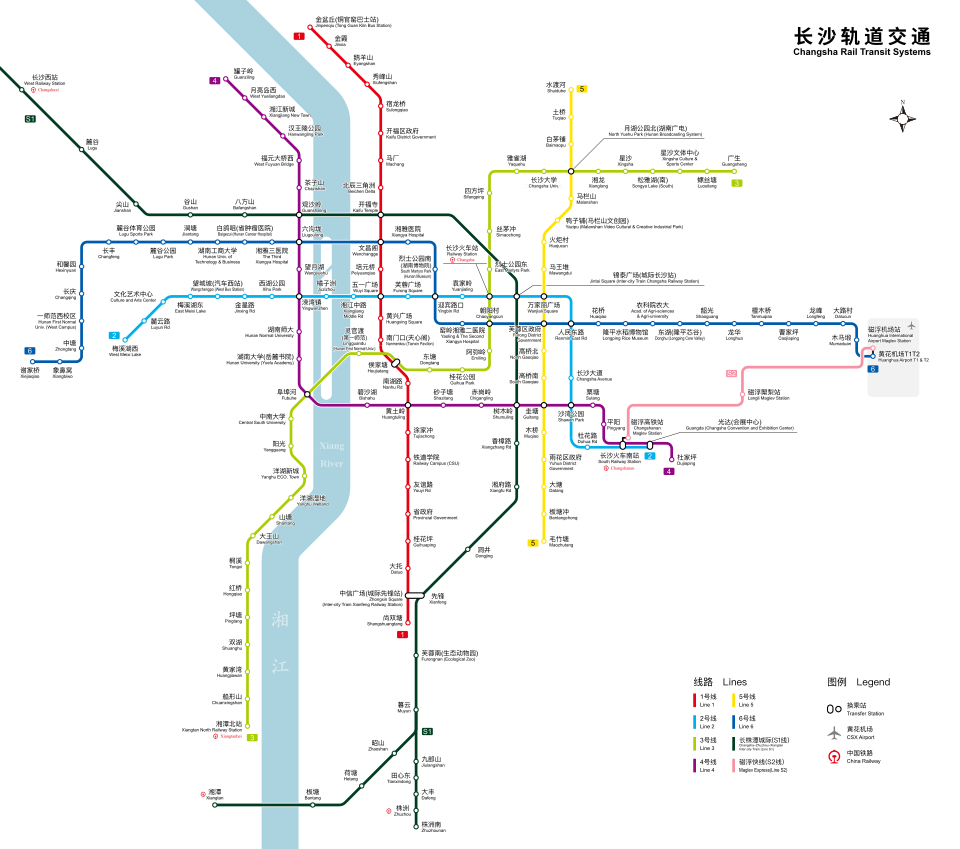
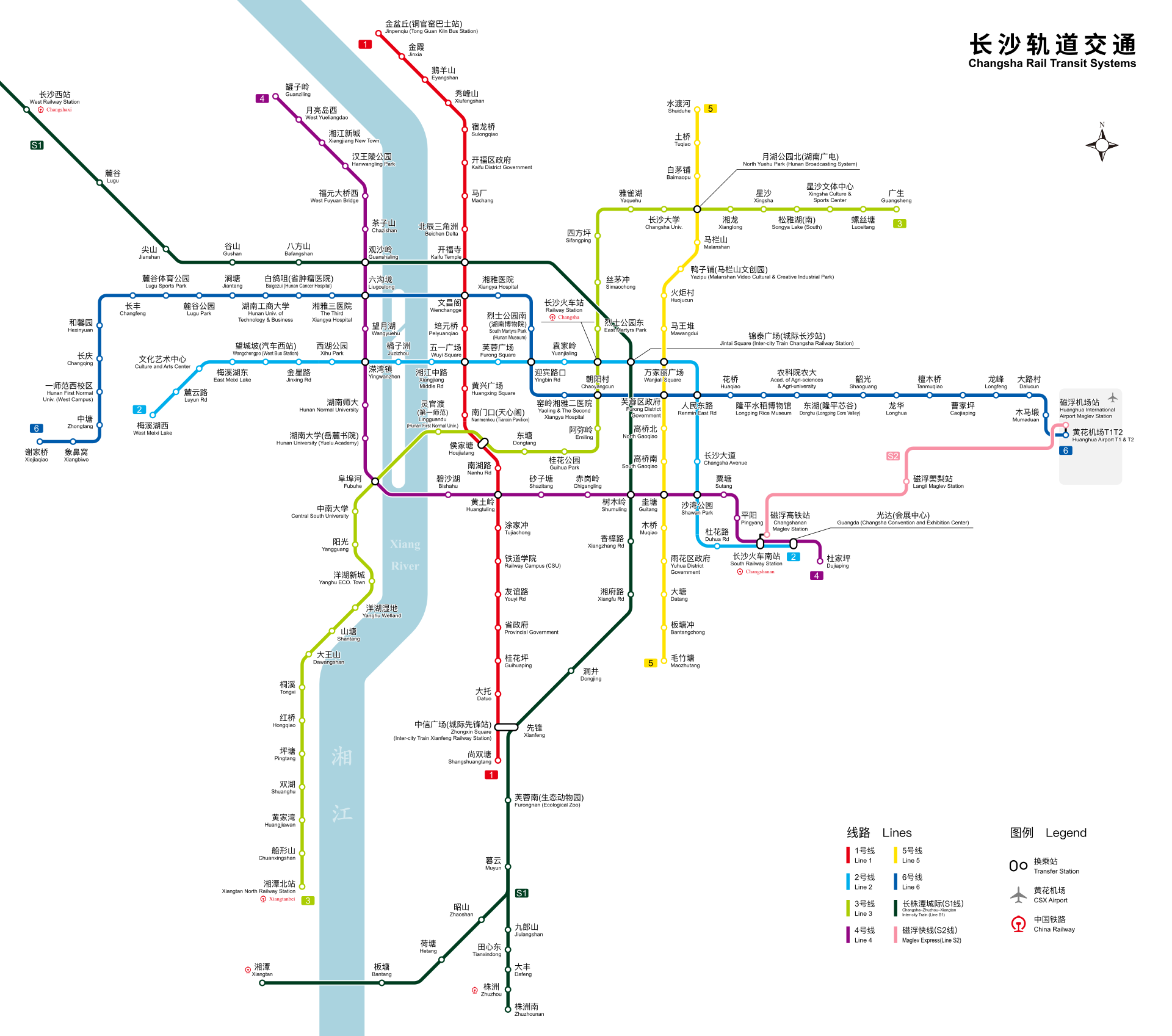

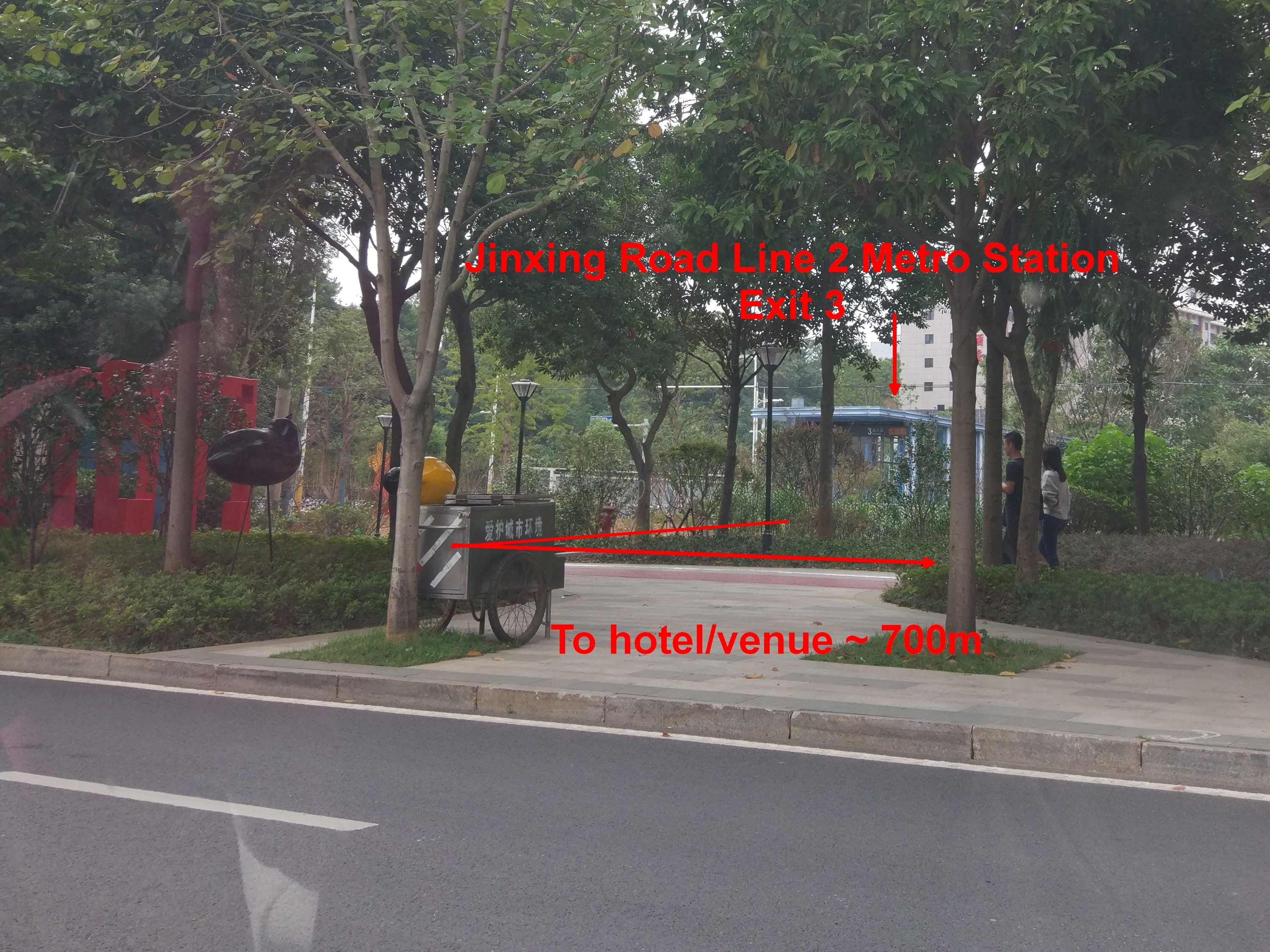
- By metro: The venue, the Changsha South high-speed railway (GaoTie) station, the central city railway station and the main metro interchange can all be reached using Changsha metro line 2. The closest metro stop to the venue is Jinxing Road.Leave the metro station using exit 3 (see map above) and walk a short distance to the venue.
- By taxi (show the taxi driver the address: 247 Jinxing Middle Road, Yuelu District, Changsha : 金星中路247号). Taxi fares are approximately 1.8 RMB/km.).
Venue
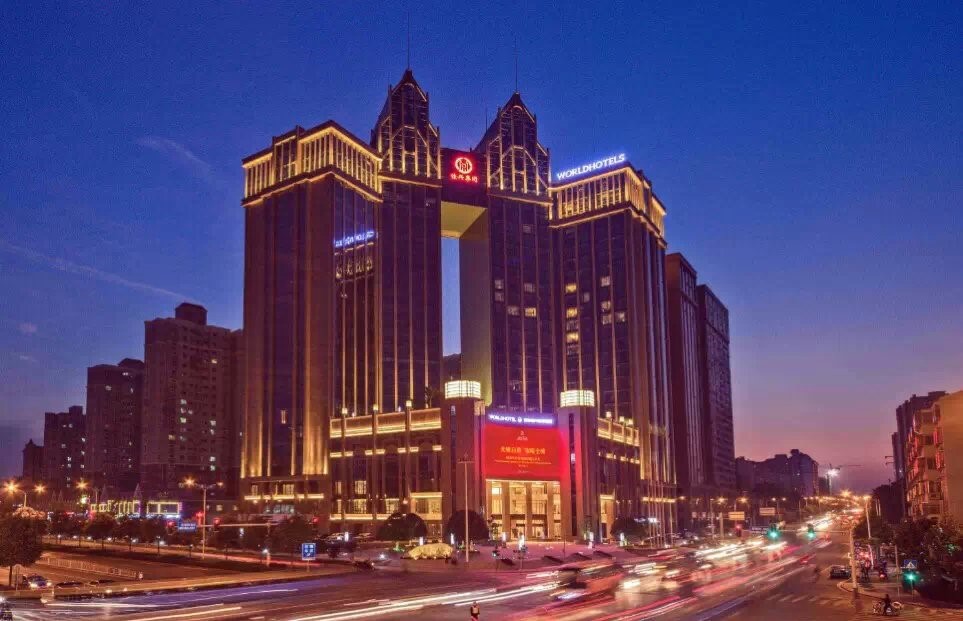
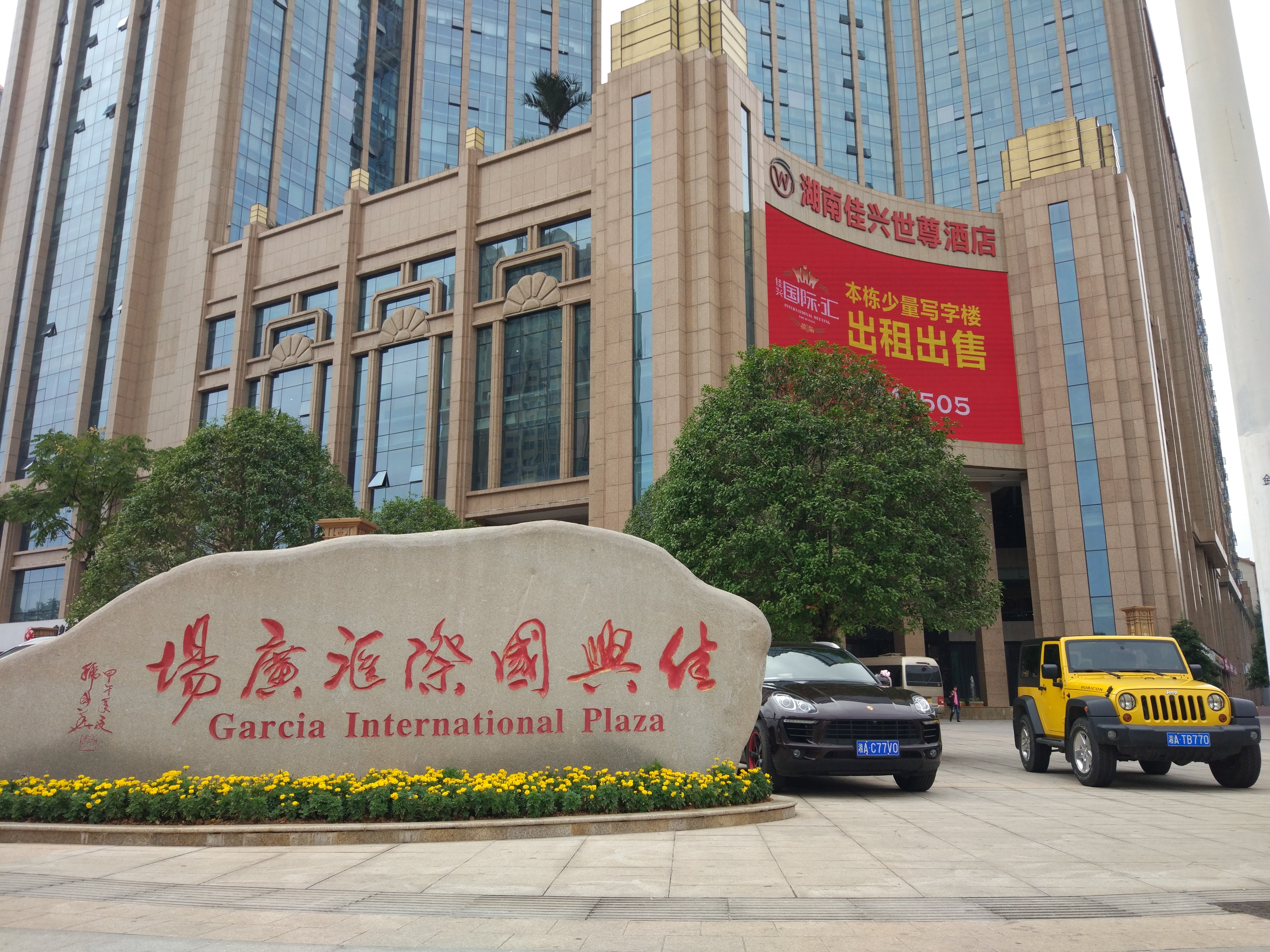
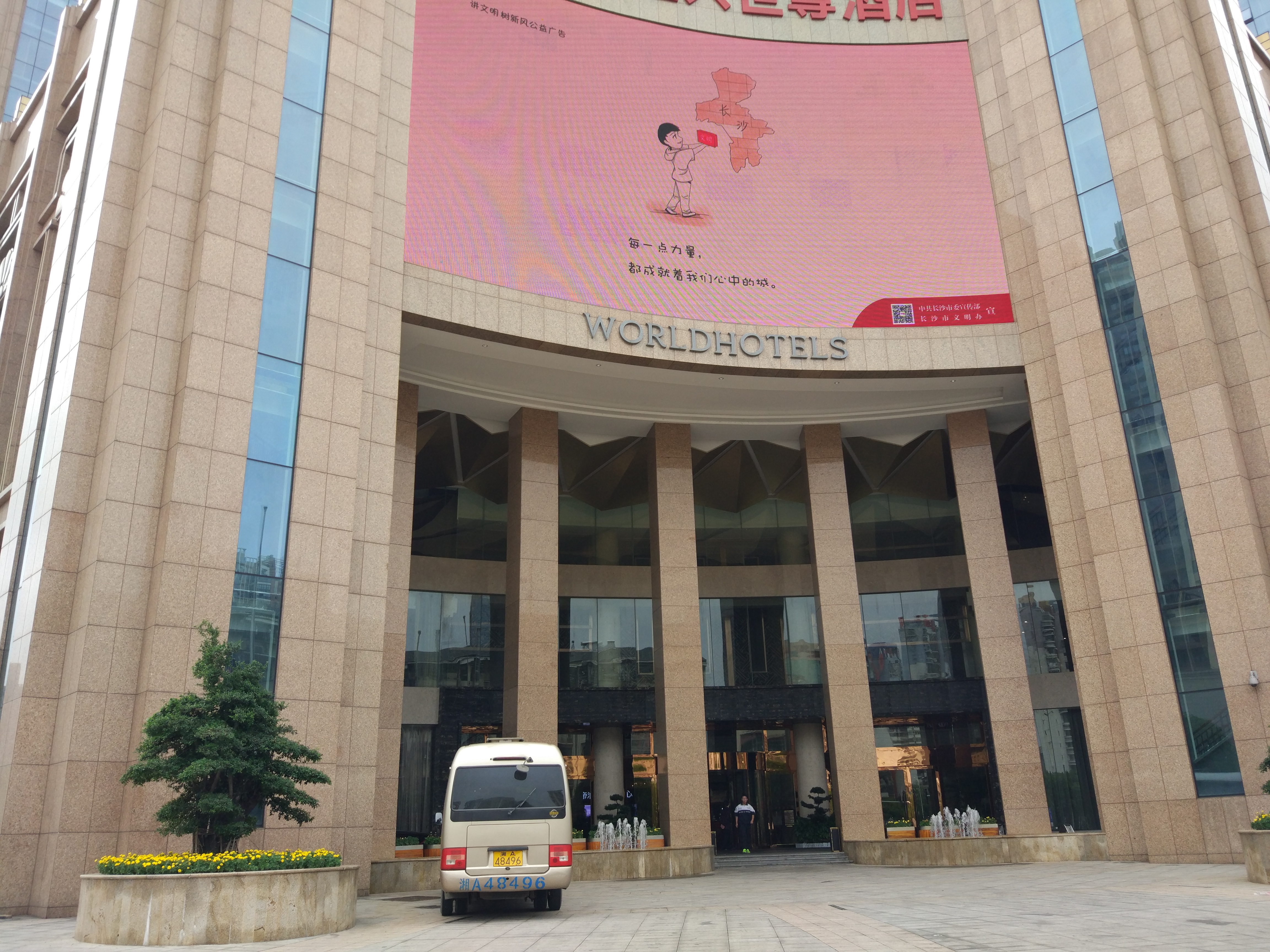
QIF2026 will be located in the WorldHotel Grand Jiaxing Hunan Hotel, Jiaxing International Hui Building (247 Jinxing Middle Road, Yuelu District, Changsha : 金星中路247号)
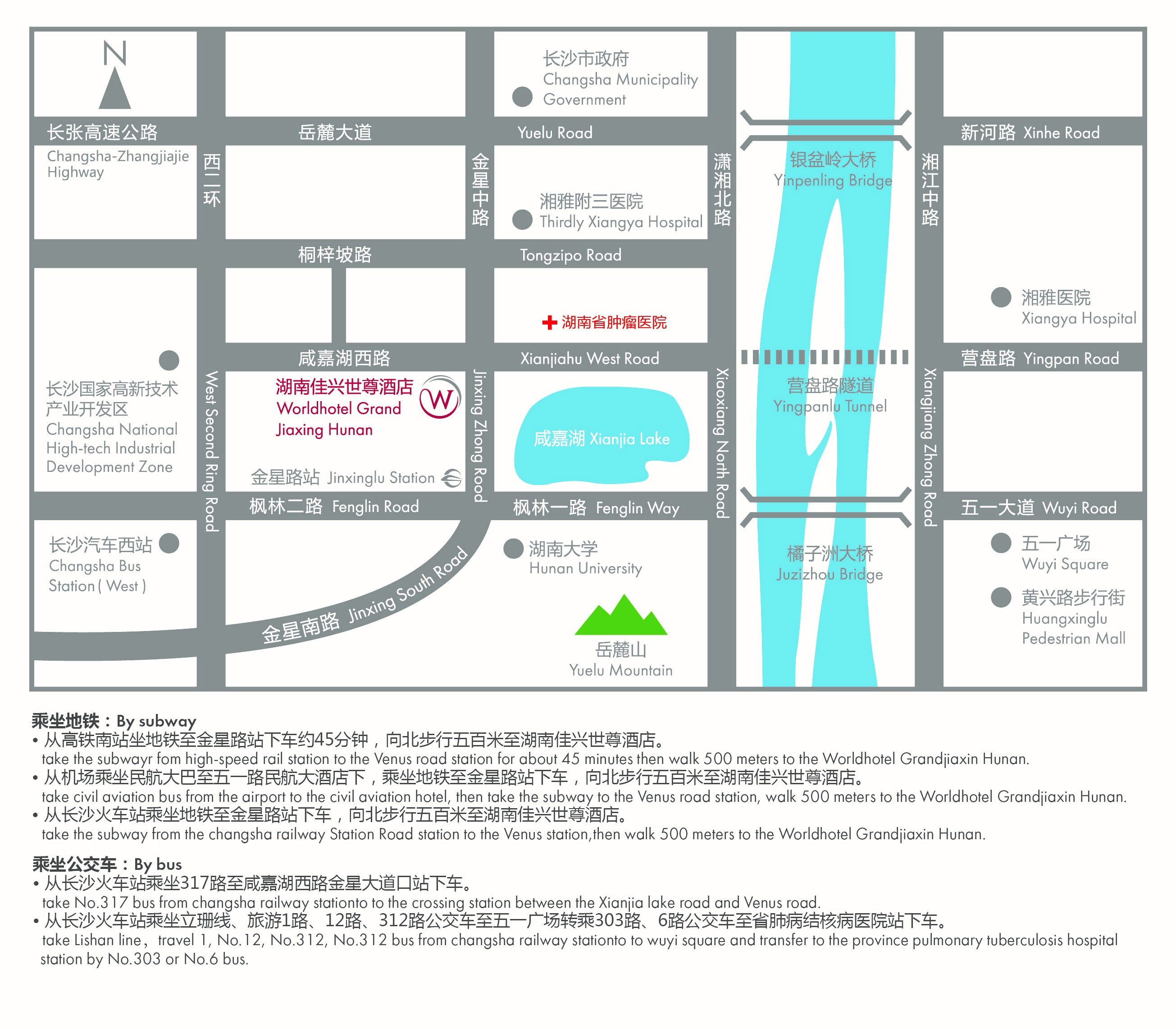
You can also download static PDF maps of the area around the hotel (English, Chinese) and an overview of the location of the hotel within Changsha.
- By metro: The venue, the Changsha South high-speed railway (GaoTie) station, the central city railway station and the main metro interchange can all be reached using Changsha metro line 2. The closest metro stop to the venue is Jinxing Road.Leave the metro station using exit 3 (see map above) and walk/take a taxi 1 km north to the venue.
- By taxi (show the taxi driver the address: 247 Jinxing Middle Road, Yuelu District, Changsha : 金星中路247号). Taxi fares are approximately 2 RMB/km.
You can click on any of the photos below to see a larger version
Other Sources of Information
Info:
Helpers: Conference helpers may be found at the conference itself, the airport and the high-speed railway station.
If you are not a Chinese speaker, you may find it useful to download and install a translator app on a portable device (Android/iOS, etc.), e.g. Microsoft Translator, before entering China. Most translator apps allow you to download and install 'offline translation dictionaries' - these are highly recommended and very useful, because they will work even without a phone data connection or Internet connection. Some of these apps have text recognition features, allowing you to point your device camera at some text and get an instant translation. Others also have voice recognition features. It is generally also a good idea to install a Chinese keyboard (input method IME) on your device alongside your existing language keyboard: this could make it easier for Chinese speakers to type any replies to queries or information into the translator app.
In any files used for presentations, please make sure the files are saved with embedded fonts. This helps to reduce problems associated with required mathematical/non-English characters not being present on the computer used for the presentation.
Recommended useful phone apps for China:
Translation appsIf you are not a Chinese speaker, you may find it useful to download and install a translator app on a portable device (Android/iOS, etc.), e.g. Microsoft Translator, before entering China. Most translator apps allow you to download and install 'offline translation dictionaries' - these are highly recommended and very useful, because they will work even without a phone data connection or Internet connection. Some of these apps have text recognition features, allowing you to point your device camera at some text and get an instant translation. Others also have voice recognition features. It is generally also a good idea to install a Chinese keyboard (input method IME) on your device alongside your existing language keyboard: this could make it easier for Chinese speakers to type any replies to queries or information into the translator app.
Other recommended apps
Alipay (Android/iOS) This is the first of China's 'everything' apps. It has an 'international' version and a Chinese version (the user can switch between these): the former is more convenient for non-Chinese speakers. Also, non-Chinese credit/debit cards and country-specific payment apps can be connected to Alipay to make everyday QR-code payments easy. Note that there may be a small (~3%) percentage fee charged for transactions over a certain limit per day - check the terms and conditions. Alternatively, Alipay offer a virtual 'Tour Card' (search within the app) - money can be loaded into this virtual card. Note however that this option, there is an up-front fee of 5% every time the virtual tour card is topped up. You can find a guide here.There are many useful 'mini-programs' within Alipay, including ride-hailing services, train/air tickets etc.
WeChat (aka Weixin) (Android/iOS) Another 'everything' app, with added equivalents of WhatsApp/TikTok and many more. More messaging-oriented than Alipay.Again, the interface can be set to non-Chinese languages. Again, non-Chinese credit/debit cards and country-specific payment apps can be connected to WeChat Pay to make everyday QR-code payments easy. There are many useful 'mini-programs' and built-in features also within WeChat, including ride-hailing services, train/air tickets, image-based (e.g. via a phone camera) translation capabilities and more.
Amap Global (Android/iOS)Replaces Google Maps, which is blocked in China. Provides a very good, up to date maps service in English and other non-Chinese languages.
Trip.com (Android/iOS)Travel (train/air tickets), along with some capabilities to book tourist attraction tickets.
DiDi (Android/iOS)Ride hailing app, equivalent of Uber/Bolt etc. Also an interface in English. Can be connected to an Alipay/WeChat account for easy payments.
NOTE 1: If you anticipate using these apps (they are practically universally used in China), we strongly advise to register on these apps using your official proof of ID (e,g, passport) and connect non-Chinese payment cards and apps to your account BEFORE ENTERING CHINA.
NOTE 2: If you use a ride-hailing app e.g. DiDi, on pickup the driver will usually confirm with you the last 4 digits of the phone number used for app registration. An image of those 4 digits, or knowledge of the Chinese words for them, may be useful.
Accommodation:
Changsha Accomodation (Venue)
We have booked a block of rooms in the venue hotel. Delegates should indicate in their registration form if they wish to book any of these rooms. Delegates can also pay on arrival unless otherwise arranged. The hotel accepts Visa and MasterCard credit cards.
All the lectures and the banquet will also take place at this hotel.
We will reserve two room types (both types have ensuite WC and shower) :
- ROOM OPTION A: 450RMB/day (includes breakfast). Floors 11 and 12, 33 sq.m. Desk + chairs + bath tub [There are 9 such king-bed rooms, the others are twin-bed (bed width 1.2m)].
- ROOM OPTION B: 350RMB/day (includes breakfast). Floors 1-4, 32 sq.m, chairs [There are 9 such king-bed rooms, the others are twin-bed (bed width 1.2m)].
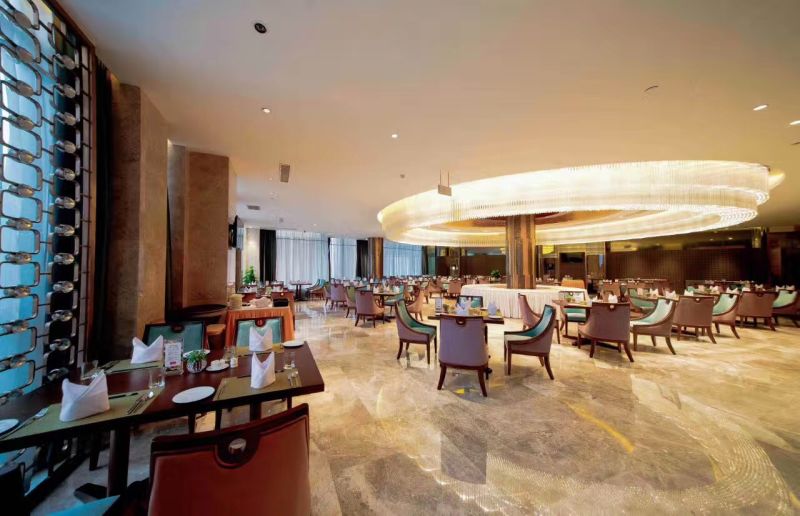
Breakfast is included with the room booking, and is served at the breakfast restaurant on the ground floor of the hotel. Lunch buffet will be provided free of charge (your conference bag will contain the necessary tickets) and will be served in the ballroom on the second floor. Dinner buffet will cost an additional 108 RMB per meal.
If you wish to reserve one of these rooms, please send ALL of the following information by email to qifteam@quantum-int.org with your registration form:
- Your full name *exactly* as it appears on your passport
- Your Passport number
- Your flight number or train number when you have booked
- Your arrival date
- Your departure date
- Your choice of room; OPTION A or OPTION B.
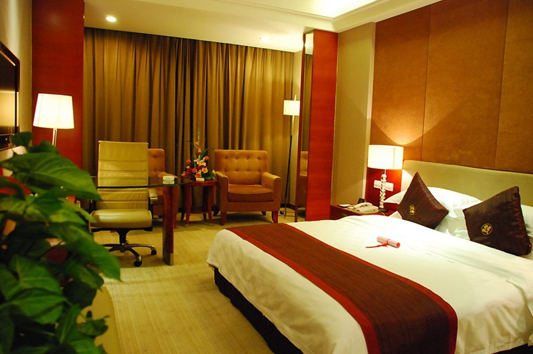 Example Option A room
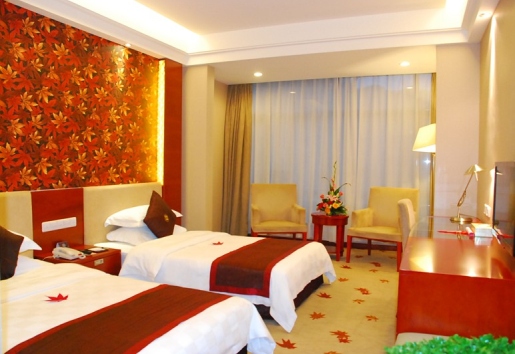 Example Option B room