Quantum International Frontiers 15-18 October, 2026,
Changsha, Hunan Province, P.R. China.
On the occasion of the 88thAnniversary of the founding of
Hunan Normal University.
About Quantum International Frontiers 2026
Quantum International Frontiers 2026 will include sessions on:
- Session titles:
- Microcavity photonics and Quantum Sensing
- Quantum Modelling for Energy Conversion and Storage
- Developments in Theoretical Quantum Chemical Physics
- Plasmas and Particles in Chemistry and Physics
- Molecular and Nano-materials for Electronics
- Quantum Effects and Applications
- Relativistic Effects for Quantum Chemistry
- Spectroscopy, Molecular Structure and Dynamics
- Quantum Frontiers and Green Chemistry
- Atoms and Molecules in Strong Fields
- Developments in Theoretical Concepts in Quantum Chemistry
- Macromolecular chemistry synthesis, assembly and properties
Traditional and non-traditional lecture formats and poster sessions will be implemented in this conference.
- Frontier lecture: 60 minutes: 30 minutes invited talk immediately followed by 30 minutes of audience discussion. The lecture material should be of a pedagogic level and submitted by 2026/08/01 for distribution to the Q.I. Frontiers audience. Limited numbers of slots available.
- Pavlo O. Dral: AI Scientists for Quantum Chemical Simulations
- Zhonghan Hu: The Finite Coulomb Lattice Sum (click title for downloadable PDF)
- Tomasz A Wesolowski: Multiplicative embedding potentials for multi-scale simulations of electronic properties: exact properties and approximations (click title for downloadable PDF)
- Hong Jiang: Recent developments of density-matrix based quantum embedding approaches to strongly correlated systems
- Yun-Feng Xiao: Ultra-high-Q Microcavity Optics & Photonics
- Chao-Hong Lee:
- Xiaosong Ma:
- Pedagogical lecture: 45 minutes: The lecture material (PPTs, PDF) must be at a level suitable for final year undergraduate students and the audience may interrupt the speakers. There should be no jargon or unexplained acronyms. Limited numbers of slots available.
- Dongqing Wei:AI drug discovery with quantum computing
- Maxim Gelin: Femtosecond nonlinear spectroscopy from the point of view of a theoretician.
- John M. Herbert: Large-Scale, High-Accuracy Quantum Chemistry via Fragmentation
- Tiancai Zhang: Neutral atom array and its strong coupling to an optical cavity
- Denis Sh. Sabirov: Polarizability of fullerenes and polycyclic aromatics. From DFT to materials science and astrochemistry
- Julia Contreras-García:
- Invited lecture: 30 minutes (25 minutes talk, 5 minutes for questions)
- Cheol Ho Choi: MRSF-TDDFT and Beyond
- Xiaoyan Cao: New Developments and Applications of Relativistic Energy-consistent Pseudopotentials
- Elfi Kraka: From Phonon Bands to Bonds: Wavevector-Resolved and Wannier-Type Local Vibrational Mode Analysis
- Libor Veis: Projection-Based DMRG-in-DFT Embedding for Strongly Correlated Molecular Systems
- Sidian Li: Fluxional Covalent Bonds, Hydrogen Bonds, and Halogen Bonds in Chemistry
- Michael Dolg: Investigation of medium-sized methane clusters with quantum chemical first principles and ab initio calculations
- Timothy Hele: A Radical Approach to Machine Learning and Electronic Structure Theory
- Keyu Xia: Singularity-enhanced sublinear sensing with linear sensors
- Peifeng Su: A Low-Scaling Tensor Decomposition Framework for Accurate Electronic Structure: Block Tensor Decomposition and its Applications in Electron Correlation Methods
- Wenjie Dou: Memory kernel coupling theory to quantum dynamics
- Jianqi Zhang: Experimental witness of quantum jump induced high-order Liouvillian exceptional points
- Yasuteru Shigeta: An Integrated Computational Chemistry Workflow for Drug Discovery and Protein Function Analysis
- James Anderson: The Impact of Scalar Relativity and Electron Correlation on QTAIM Properties
- Yang Guo: Multi-reference Methods for Large Active Spaces and Relativistic effects
- Xiguang Wang: Electrically tunable non-Hermitian magnon propagation in magnetic waveguides
- Ireneusz Grabowski: An Evaluation and Development of the Hybrid KS DFT Functionals Based on the KS Exchange-Correlation Potentials - the UMK26 hybrid functional
- Yonggang Yang: Ultrafast charge migration: simulations, manipulations, and applications
- Yuanhao Mao: Chiral laser gyroscopes breaking the lock-in limit
- Jin-Lei Wu : Superadiabatic engineering of quantum state transfer across multi‑state platforms
- Yafeng Jiao: Enabling Strong Molecule-Light Entanglement at Room Temperature with Molecular Cavity Optomechanics
- William Glover: Water Catalyzes the Decay of a Ground-State Twisted Intermediate During the Electronic Relaxation of Uracil
- Michał Lesiuk: Rank-reduced coupled cluster theory
- Ran Huang: Nonreciprocal and non-Hermitian photon blockade effects
- Song Jianxin: Synthetic Chemistry of Porphyrinoids
- Paul W. Ayers: The Seniority Quantum Number in Many-Body Quantum Mechanics
- Yan Wang: Liquid photonic-molecule microlasers for ultrasensitive biosensing
- Mikhail V. Polynski:
- Sergey Kozlov:
- Sławomir J Grabowski:
- Troy van Voorhis:
- Wenning Wang:
- Xiao Yuan:
- Dongping Zhong:
- Cristina Trujillo del Valle:
- Fernando Buendia Zamudio :
- Zhongyu Liu: Equation-of-motion method and simulation of six-wave-mixing signals of excitionic trimer
- Raj Roy: Radiosensitizing potential of halo-uracils via low-energy electrons: A simulation study
- Alireza Lashkaripour: Quintet Mixed-Reference Spin-Flip (QMRSF) Theory: A New Framework for Strong Correlation
- Bahodurov Janobiddinkhuja: Interfacial Design Rules for Oxide/Metal Composite Catalysts: A DFT Screening for Water Splitting and CO2 Reduction
- Xinmiao Li: Theoretical study of internal conversion through the prism of six-wave-mixing spectroscopy
- Weixi Wu: Exploring Singlet Fission Characteristics via Simulations of Six-Wave Mixing Spectroscopy
- Igor Sawicki: Limits of self-consistent Double Hybrid DFT
- Mateusz Witkowski: MERCE - Method-Space Correlation Energy Extrapolation
- Jiawen Kong: Full symmetry-breaking of electronic and nuclear dynamics for low attosecond resolution of electronic chirality
- Jingqin Tu: Low-Attosecond Resolution Electronic and Nuclear Dynamics: How Helical Electron Motion Drives Chiral Asymmetry
Posters
Important Deadlines
- Deadline 1: 2026/04/30 Early bird registration - see below..
- Deadline 2: 2026/09/01 Abstract submission deadline.
- Deadline 3: 2026/09/20 Late registration - see below.
Mark up your calendars!
Quantum International Frontiers 2026 will be hosted by Hunan Normal University, specifically:
- The Quantum Optics Lab of the Chinese Department of Education
- The Key Laboratory of Low-Dimensional Quantum Structures and Quantum Control of the Ministry of Education
- The Synergetic Innovation Center for Quantum Effects and Applications (SICQEA)
- The College of Chemistry & Chemical Engineering
QI Frontiers 2026 will be located in Changsha, capital city of Hunan Province.
Conference Committee and Sponsors

Joint Chair: Professor Samantha Jenkins, Director of Theoretical and Computational Chemistry, (Hunan, China)
BEACON Research Group
College of Chemistry & Chemical Engineering
Synergetic Innovation Center for Quantum Effects and Applications (SICQEA)
Hunan Normal University, 36 Lushan Lu, Yuelu Qu
CHANGSHA 410081, Hunan, P.R. CHINA.
Joint Chair: Professor Hui Jing, (Hunan, China),
Hunan Normal University
Co-Chair: Professor Le-Man Kuang (匡乐满), (Hunan, China), Key Laboratory of Low-Dimensional Quantum Structures and Quantum Control of Ministry of Education, Synergetic Innovation Center for Quantum Effects and Applications (SICQEA), Hunan Normal University, Changsha 410081, China.
lmkuang@hunnu.edu.cn Co-Chair: Professor Steven R. Kirk, (Hunan, China)BEACON Research Group
College of Chemistry & Chemical Engineering
Synergetic Innovation Center for Quantum Effects and Applications (SICQEA)
Hunan Normal University, 36 Lushan Lu, Yuelu Qu
CHANGSHA 410081, Hunan, P.R. CHINA.
Co-Chair: Professor Jianxin Song, (Hunan, China)
College of Chemistry & Chemical Engineering
Hunan Normal University, 36 Lushan Lu, Yuelu Qu
CHANGSHA 410081, Hunan, P.R. CHINA.
Co-Chair: Professor Hongrong Liu, (Hunan, China),
Co-Chair: Professor Jieqiao Liao, (Hunan, China),
Co-Chair: Professor Zhihui Peng, (Hunan, China),
Co-Chair: Professor Changliang Ren, (Hunan, China),

Co-Chair: Professor Hai-Yan Wang, (Zhengzhou University of Light Industry, Henan, China)
Frontier Graduate Prizes
A number of cash prizes, generously provided by Elsevier, will be awarded for the best student posters presented at the conference.

Abstract submission
NOTE: abstract submission deadline is listed above
Please download the Abstract Template (.docx format), complete the form, then email it to qifteam@quantum-int.org. PLEASE NOTE THAT THIS EMAIL ADDRESS ONLY *RECEIVES* EMAIL - you should not receive emails originating from this address.Program
Details of the conference program will appear here. UNDER REVISION
Most recent update 2026/09/25 06:53 UTC+8
Depending on the size of your screen, the program below may appear with horizontal or vertical scroll bars.
|
Thursday 15-10 |
Friday 16-10 |
Saturday 17-10 |
Sunday 18-10 |
||||
|
14:00 Registration |
8:30 OPENING CEREMONY
|
Session Chair: Sergey Kozlov
|
Session Chair: John M. Herbert |
Session Chair: Jianxin Song |
Session Chair: Xiguang Wang |
Session Chair: Rui-Bo Jin |
|
|
Session Chair: Hui Jing |
|||||||
|
09:00 Elfi Kraka |
08:00 Frontier lecture Yun-Feng Xiao |
08:00 Paul W. Ayers |
08:00 Sidian Li |
08:00 Xiao-Ming Lu |
08:00 Jie-Qiao Liao |
||
|
08:30 Gregor Lauter |
08:30 Yonggang Yang |
08:30 |
08:30 Liwei Yu |
||||
|
9:30 Pedagogical lecture Tiancai Zhang |
9:00 Frontier lecture Zhonghan Hu |
09:00 Timothy Hele |
09:00 Wenning Wang |
09:00 |
09:00 Changliang Ren |
||
|
09:30 James Anderson |
09:30 Dongping Zhong |
09:30 Fuxiang Li |
09:30 Ran Huang |
||||
|
10:00 Tea break |
|||||||
|
10:15 Pedagogical lecture Denis Sabirov
|
10:15 Cristina Trujillo del Valle
|
10:15 Samantha Jenkins |
10:15 Frontier lecture Hong Jiang
|
10:15 Zhihui Peng |
10:15 Yang Guo |
||
|
10:45 Jin-Lei Wu
|
|||||||
|
11:15 Pedagogical lecture Maxim Gelin |
10:45 Ireneusz Grabowski |
10:45 Qing-Shou Tan |
10:45
|
||||
|
11:00 Cheol Ho Choi |
11:15 Sergey Kozlov |
11:15 Dongbo Zhao |
11:15 PeifengSu |
11:15 Mingyuan Hong |
|||
|
12:00 Lunch CONFERENCE PHOTOGRAPH |
12:00 Lunch Poster Session Chair: Tianlv Xu |
12:00 Lunch Business meeting |
|||||
|
Session Chair: Steven R. Kirk |
Session Chair: Ireneusz Grabowski |
Session Chair: James Anderson |
Session Chair: Yonggang Yang |
Session Chair: Xiao-Ming Lu
|
Session Chair: Yaxin Zhai |
||
|
13:30 Frontier lecture Pavlo O. Dral |
13:30 Frontier lecture Chao-Hong Lee |
13:30 Libor Veis |
13:30 Xiaoyan Cao
|
13:30 Xiguang Wang |
13:30 Rui-Bo Jin |
||
|
14:00 Michael Dolg |
14:00 Kaisheng Wang |
14:00 Qiong Chen |
14:00 Yafeng Jiao |
||||
|
14:30 Pedagogical lecture Xiaosong Ma
|
14:30 Keyu Xia |
14:30 Troy van Voorhis |
14:30 Ling Xu |
14:30 Xiao Yuan |
14:30 Yuanhao Mao |
||
|
15:00 Sławomir J Grabowski |
15:00 Mingbo Zhou |
15:00 Jianqi Zhang |
15:00 Ye-Xiong Zeng |
||||
|
15:30 Tea break |
|||||||
|
16:00 Pedagogical lecture Dongqing Wu |
15:45 Frontier lecture Tomasz A. Wesolowski |
15:45 William Glover |
15:45 Fernando Buendia Zamudio |
15:45 Wenjie Dou |
15:45 Ji-Bin Yuan |
||
|
16:15 Mikhail V. Polynski |
16:15 Jianxin Song |
16:15 Xinxing Zhou |
16:15 Xiao-Ying Zhou |
||||
|
16:45 Pedagogical lecture Julia Contreras-García |
16:45 Yasuteru Shigeta |
16:45 Michał Lesiuk |
16:45 Ya-Qian Liu |
16:45 Yan Wang |
|||
|
17:15 Yu-Hong Liu |
17:15 Yong-Qiang Li |
||||||
|
18:00 Closing Ceremony |
|||||||
|
18:00 Dinner |
18:00 Dinner |
||||||
Invited lecture: 30 minutes (25 minutes talk, 5minutes for questions)
Pedagogical lecture: 45 minutes: The lecture material (PPTs, PDF) must be at a level suitable for final year undergraduate students and the audience may interrupt the speakers. There should be no jargon or unexplained acronyms. Limited numbers of slots available.
Frontier lecture: 60 minutes: 30 minutes invited talk immediately followed by 30minutes of audience discussion. The lecture material should be of a pedagogic level and submitted by August 1st 2026 for distribution to the QI. Frontiers audience.
International Scientific Committee
- Angela K. Wilson (USA)
- Mark S. Gordon (USA)
- Piotr Piecuch (USA)
- Alia Tadjer (Bulgaria)
- Sergei Manzhos (Japan)
- J. Vincent Ortiz (USA)
- Erkki Brändas (Sweden)
- Samantha Jenkins (P.R. China)
- Steven R. Kirk (P.R. China)
- Yan (Alexander) Wang (Canada)
- Yasuteru Shigeta (Japan)
- Chao-Ping Hsu (Taiwan, China)
- Frank Harris (USA)
- Chang-Pu Sun (P.R .China)
- Wenjian Liu (P.R. China)
- Martin Quack (Switzerland)
- Anna Krylov (USA)
- Martin J. Paterson (UK)
- Malgorzata Biczysko (P.R. China)
- Sir David Clary (UK)
- Wei Ren (P.R. China)
- Jianxin Song (P.R. China)
- Jian Liu (P.R. China)
- Nawee Kungwan (Thailand)
- Sourav Pal (India)
Local Organizing Committee
- Samantha Jenkins (Changsha)
- Steven R. Kirk (Changsha)
- Hongrong Liu (Changsha)
- Jieqiao Liao (Changsha)
- Hui Jing (Changsha)
- Zhihui Peng (Changsha)
- Changliang Ren (Changsha)
- Tianlu Xu (Changsha)
- Le-Man Kuang (Changsha)
- Yaxin Zhai (Changsha)
Honorary Committee
- Akitomo Tachibana (Japan)
- Jeffrey Reimers (P.R. China/Australia)
- Marco A.C. Nascimento (Brazil)
- Mark Eberhart (USA)
- Cherif Matta (Canada)
- Paul W. Ayers (Canada)
- Philip Hoggan (France)
- David Wales (UK)
- Tucker Carrington (Canada)
- Weitao Yang (USA)
- Mike Robb (UK)
- Markus Reiher (Switzerland)
- Fenglong Gu (P.R. China)
- Debashis Mukherjee (India)
- Wei Wu (P.R. China)
- Kersti Hermansson (Sweden)
- Shuhua Li (P.R. China)
Registration
Please scan the following conference code to complete the registration before 5th October 2026

Conference Photos
Conference photos will appear here after the conference has concluded.
Venue
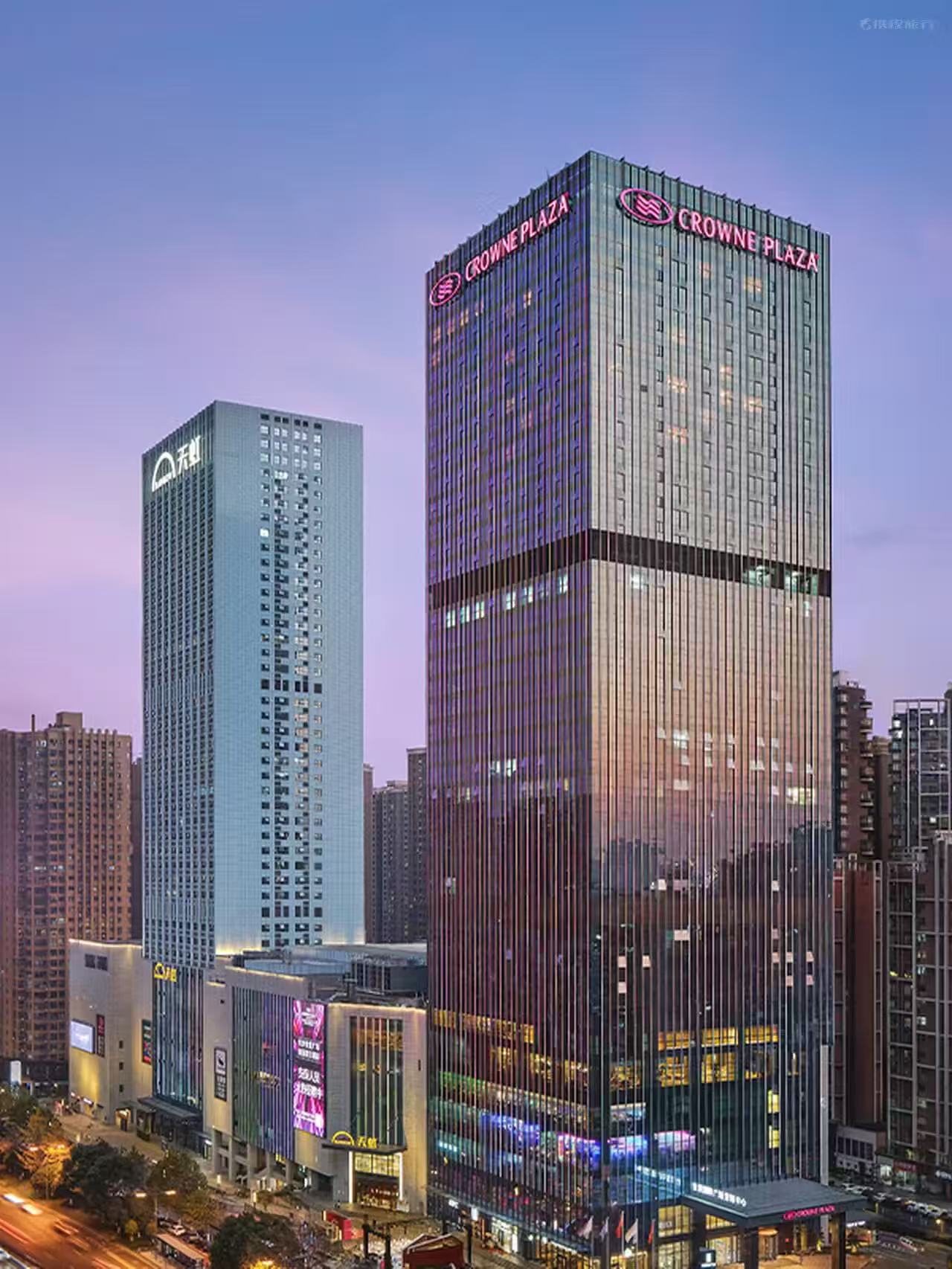
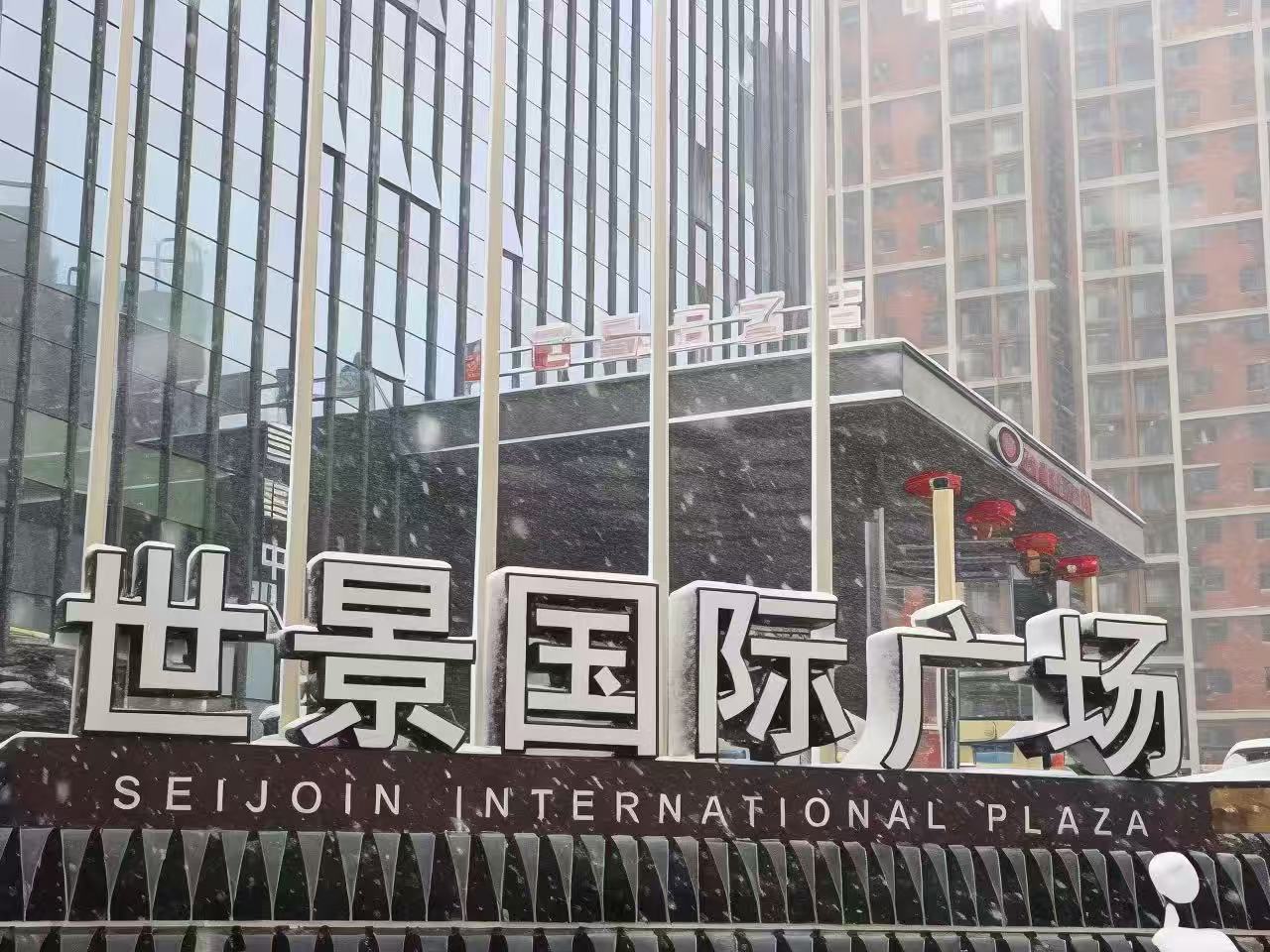
QIF2026 will be located in the Crowne Plaza Changsha Development Zone (长沙世景广场皇冠假日酒店), Building A No.192 Kaiyuan Road Changsha Economic Development Zone, Changsha ) (links:Trip.com,IHG Hotels)
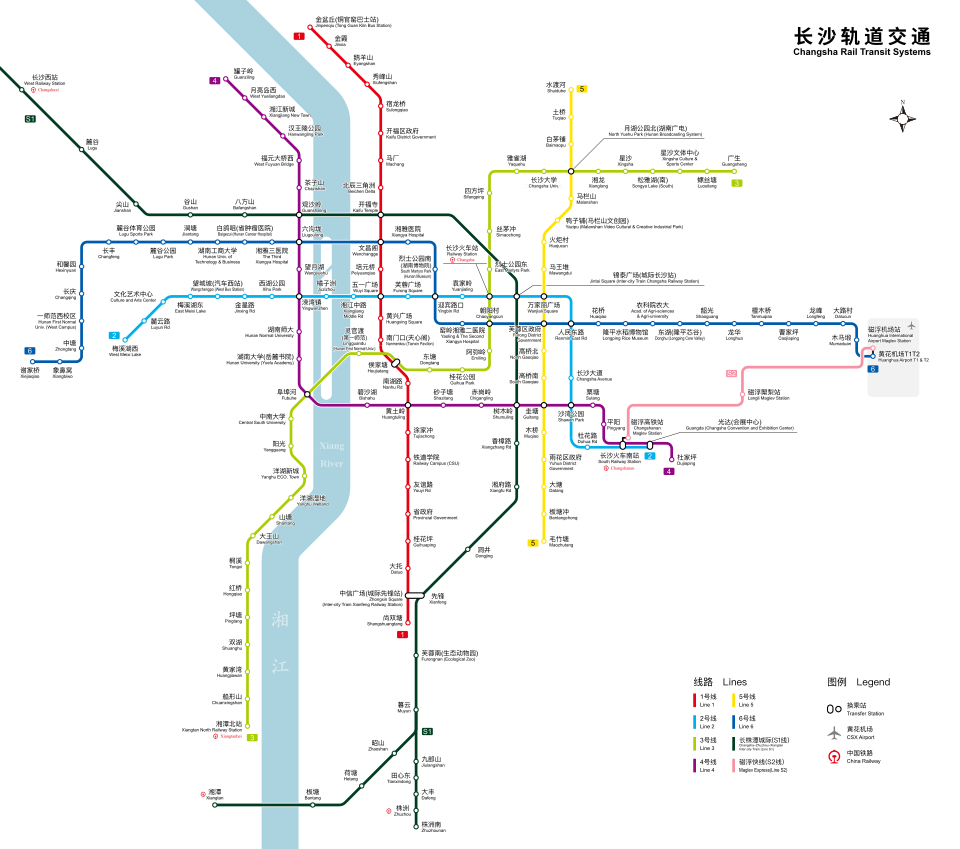
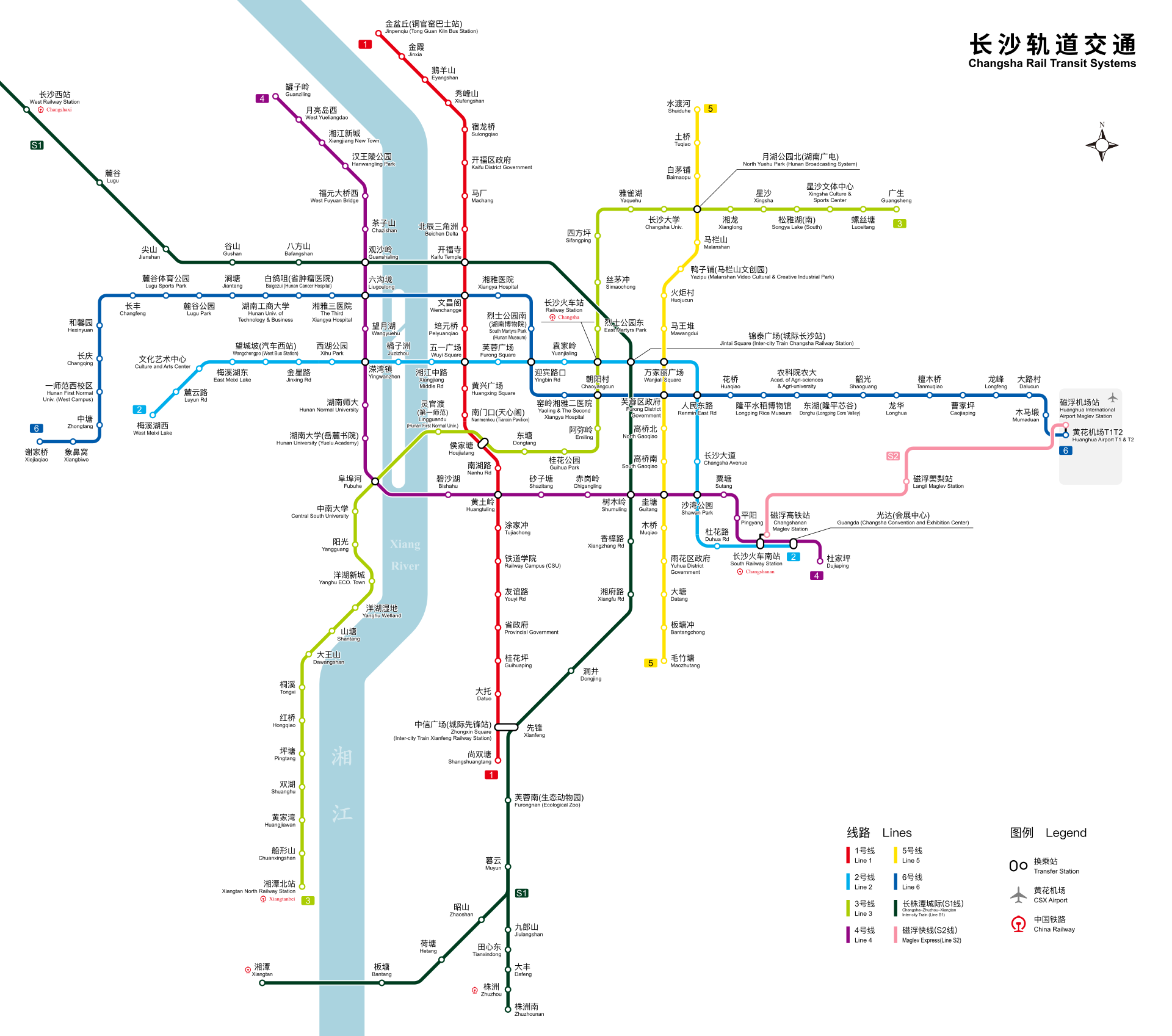
- By metro: The venue hotel lies on the Metro line 3: the two closest stations are Songya Lake (South) [Exit 1, 750m east of venue] and Xingsha [Exit 4, 960m west of venue]. From the airport, you can take Metro Line 6 and change onto Line 3 at Chaoyangcun, or from Changsha South Railway Station (Changshanan, high-speed trains) you can take Metro Line 2 north and change onto line 3 at the older central Changsha Station (see the clickable metro map below).
- By taxi (show the taxi driver the address: Building A No.192 Kaiyuan Road Changsha Economic Development Zone, Changsha : ). Taxi fares are approximately 2 RMB/km.
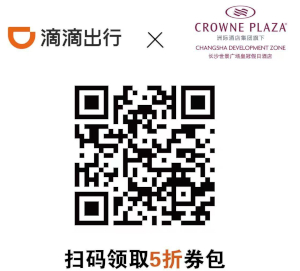
- By ride-hailing app/miniprogram (DiDi)A 50% discount for DiDi trips to/from the hotel is available by scanning this QR discount code:
Travel
PLEASE NOTE: We intend to arrange for delegates to be met at railway stations and the airport, and accompanied to these travel hubs when leaving Changsha. Please make sure that you have sent your arrival and departure details to Professor Jenkins.
Travel to China
Visas:
Many countries now have visa-free travel to China. If you are unsure, a VISITOR visa is strongly recommended. Visa requirements can be checked on sites like the SKYTEAM Visa, Passport & Health Requirements page, which accesses the IATA TIMATIC database used by airlines and travel agents. If you require an invitation letter, please contact Professor Samantha Jenkins at the email address given at the top of this page.
Additional contact details for visa application purposes are:
Xu Tianlyu,
College of Chemistry and Chemical Engineering,
Hunan Normal University, 36 Lushan Lu, Yuelu Qu,
410081 Changsha, Hunan, P.R. China.
Phone: +86 180 7316 9990
Email: xutl@hunnu.edu.cn
Professor Samantha Jenkins,
College of Chemistry and Chemical Engineering,
Hunan Normal University, 36 Lushan Lu, Yuelu Qu,
410081 Changsha, Hunan, P.R. China.
Phone: +86 15111468042
Travel within China
By air
Incoming flights arrive at Changsha HuangHua international airport (CSX). Options for travel into the city include:
- Maglev train: There is a maglev train service linking the airport to the Changsha South (ChangShaNan) railway station, from which other options are available (metro, etc., see map below)
By rail
Changsha is on the main Wuhan-Guangzhou high-speed train (gaotie)line (the high-speed train station is Changsha South (ChangShaNan) ). Train tickets can be bought:
- At a high-speed rail station in another city
Tickets for the high-speed 'G' trains (gaotie) or slightly slower 'D' trains can be bought at ticket counters at stations (stations in some of the biggest Chinese cities may have an English-speaking ticket counter).
- From Beijing, high-speed trains to Changsha operate from the Beijing West station
- From Shanghai, high-speed trains operate from Shanghai Hongqiao Station (near Shanghai Hongqiao [SHA] airport, in the east of the city). A lot of international flights to Shanghai land in Shanghai Pudong airport [PVG] (west of the city) which is all the way on the other side of the city. There is a metro line that joins the two airports but anticipate at least two hours to get from one side of Shanghai to the other by this route.
- From Guangzhou, high-speed trains operate from Guangzhou South Station.
- Online (web sites or phone apps)
A number of websites sell high-speed train tickets online. For example, to book high-speed trains on the online travel agent CTrip/Trip.com, where trains can be securely booked and paid for using, for example, Western credit cards, first select 'Trains', then enter the desired starting point and destination and date, then select the 'High-speed trains' filter to check availability. Once successfully ordered and confirmed, there are several ways to pick up the tickets (depending on whether you need paper tickets for expense reimbursal) :
- Easiest option: As E-tickets: these appear within the Trip.com app. If requested, you can show these on your phone. As E-tickets are normally registered to your passport number, you just need to find the passport-scanner desk at the train departure gates, get the clerk to scan your passport and then you can board the train.
- Ask for the paper tickets to be mailed to you (ask, e.g. CTrip/Trip.com about this),
- Ask for the paper tickets to be mailed to a hotel in, e.g. Beijing or Shanghai, where you may be stopping over before travelling on to Changsha (after checking that the hotel can keep the tickets and give them to you on your arrival there),
- Ask CTrip/Trip.com for E-tickets, then take the E-ticket codes to the ticket collection office in the relevant high-speed train station to pick up paper versions of the tickets. This can be done by presenting the ticket reference number, together with a passport for ID purposes, at specially-labelled ticket counters (these counters have the characters '护照', passport, written on them).
NOTE: Conventional (MUCH slower) trains stop at Changsha Central Station, not Changsha South Station.
- At a high-speed rail station in another city
When you arrive by rail in Changsha, there are several options to travel to the central part of the city and the conference venue. One of these is the metro system. Changsha South Railway station is on the city metro line 2 (see map).
Click on the map below for a larger version. Map is courtesy of Wikimedia Commons (Creative Commons Attribution-Share Alike 4.0 International license).
- By taxi (show the taxi driver the address: Building A No.192 Kaiyuan Road Changsha Economic Development Zone, Changsha : ). Taxi fares are approximately 2 RMB/km.).
METRO INFORMATION BEING UPDATED
Other Sources of Information
Info:
Helpers: Conference helpers may be found at the conference itself, the airport and the high-speed railway station.
If you are not a Chinese speaker, you may find it useful to download and install a translator app on a portable device (Android/iOS, etc.), e.g. Microsoft Translator, before entering China. Most translator apps allow you to download and install 'offline translation dictionaries' - these are highly recommended and very useful, because they will work even without a phone data connection or Internet connection. Some of these apps have text recognition features, allowing you to point your device camera at some text and get an instant translation. Others also have voice recognition features. It is generally also a good idea to install a Chinese keyboard (input method IME) on your device alongside your existing language keyboard: this could make it easier for Chinese speakers to type any replies to queries or information into the translator app.
In any files used for presentations, please make sure the files are saved with embedded fonts. This helps to reduce problems associated with required mathematical/non-English characters not being present on the computer used for the presentation.
Recommended useful phone apps for China:
Translation appsIf you are not a Chinese speaker, you may find it useful to download and install a translator app on a portable device (Android/iOS, etc.), e.g. Microsoft Translator, before entering China. Most translator apps allow you to download and install 'offline translation dictionaries' - these are highly recommended and very useful, because they will work even without a phone data connection or Internet connection. Some of these apps have text recognition features, allowing you to point your device camera at some text and get an instant translation. Others also have voice recognition features. It is generally also a good idea to install a Chinese keyboard (input method IME) on your device alongside your existing language keyboard: this could make it easier for Chinese speakers to type any replies to queries or information into the translator app.
Other recommended apps
Alipay (Android/iOS) This is the first of China's 'everything' apps. It has an 'international' version and a Chinese version (the user can switch between these): the former is more convenient for non-Chinese speakers. Also, non-Chinese credit/debit cards and country-specific payment apps can be connected to Alipay to make everyday QR-code payments easy. Note that there may be a small (~3%) percentage fee charged for transactions over a certain limit per day - check the terms and conditions. Alternatively, Alipay offer a virtual 'Tour Card' (search within the app) - money can be loaded into this virtual card. Note however that this option, there is an up-front fee of 5% every time the virtual tour card is topped up. You can find a guide here.There are many useful 'mini-programs' within Alipay, including ride-hailing services, train/air tickets etc.
WeChat (aka Weixin) (Android/iOS) Another 'everything' app, with added equivalents of WhatsApp/TikTok and many more. More messaging-oriented than Alipay.Again, the interface can be set to non-Chinese languages. Again, non-Chinese credit/debit cards and country-specific payment apps can be connected to WeChat Pay to make everyday QR-code payments easy. There are many useful 'mini-programs' and built-in features also within WeChat, including ride-hailing services, train/air tickets, image-based (e.g. via a phone camera) translation capabilities and more.
Amap Global (Android/iOS)Replaces Google Maps, which is blocked in China. Provides a very good, up to date maps service in English and other non-Chinese languages.
Trip.com (Android/iOS)Travel (train/air tickets), along with some capabilities to book tourist attraction tickets.
DiDi (Android/iOS)Ride hailing app, equivalent of Uber/Bolt etc. Also an interface in English. Can be connected to an Alipay/WeChat account for easy payments.
NOTE 1: If you anticipate using these apps (they are practically universally used in China), we strongly advise to register on these apps using your official proof of ID (e,g, passport) and connect non-Chinese payment cards and apps to your account BEFORE ENTERING CHINA.
NOTE 2: If you use a ride-hailing app e.g. DiDi, on pickup the driver will usually confirm with you the last 4 digits of the phone number used for app registration. An image of those 4 digits, or knowledge of the Chinese words for them, may be useful.
Accommodation:
Changsha Accomodation (Venue)
We have booked a block of rooms in the venue hotel. Delegates should indicate in their registration form if they wish to book any of these rooms. Delegates can also pay on arrival unless otherwise arranged. The hotel accepts Visa and MasterCard credit cards.
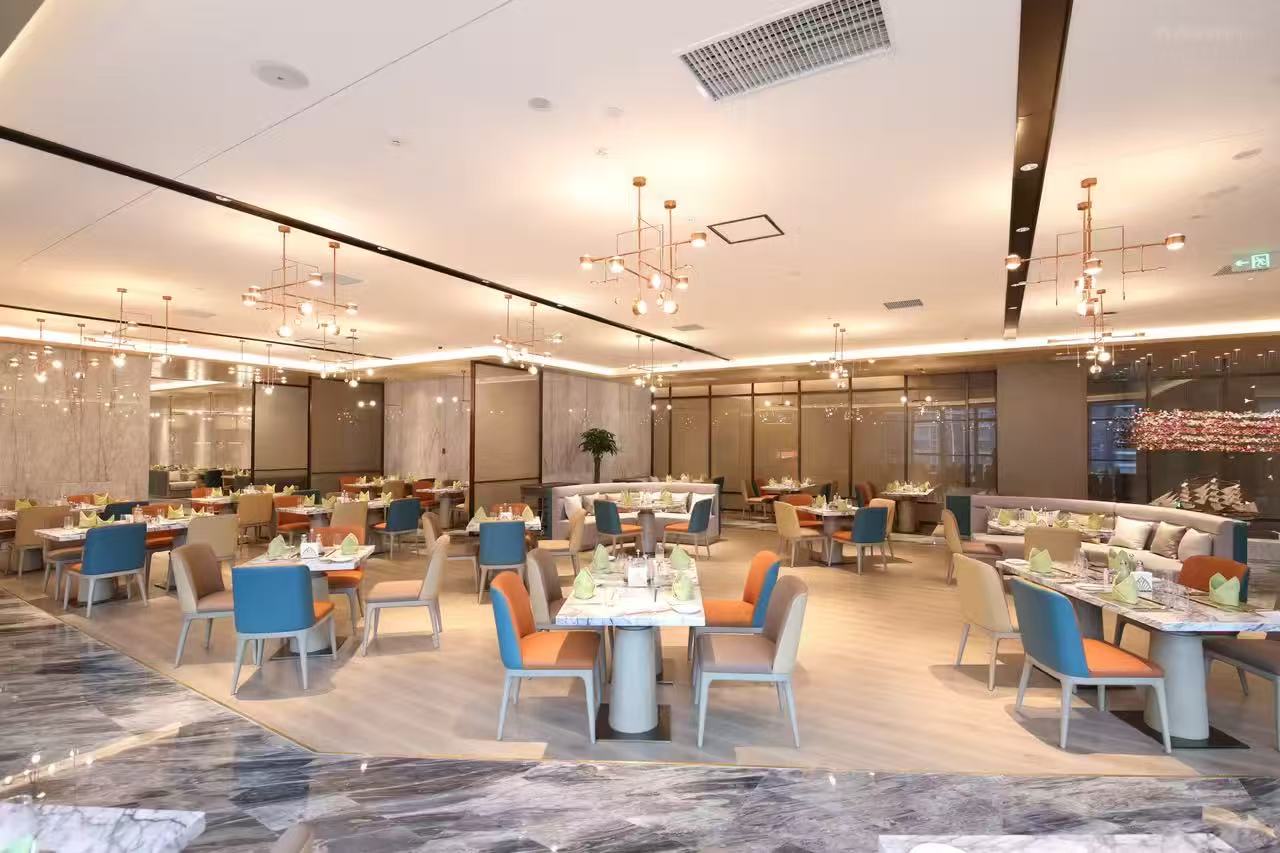
All the lectures and the buffet will also take place at the 6th floor at this hotel.
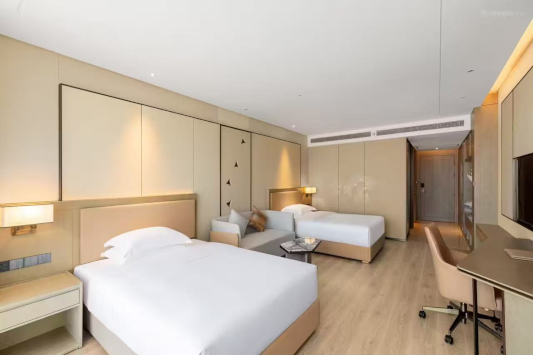
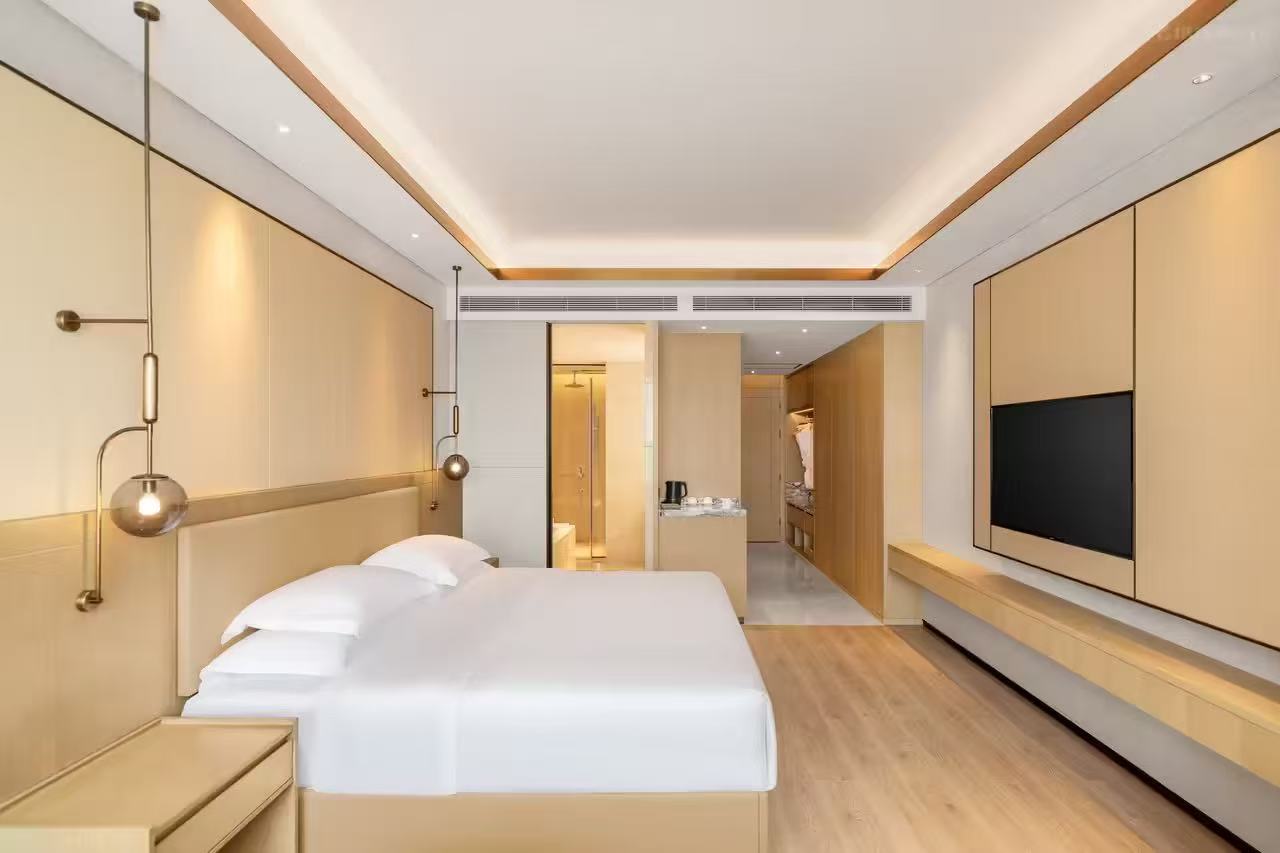
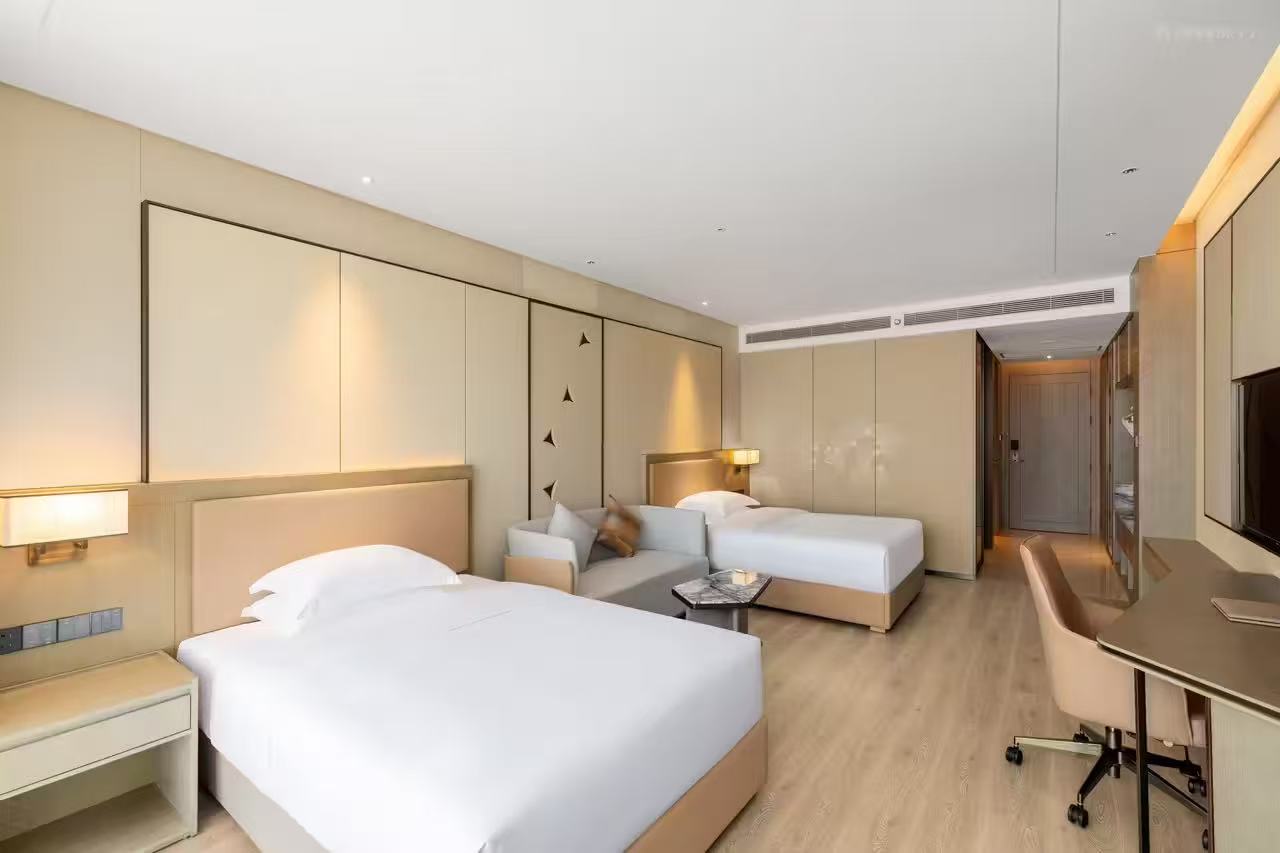
We will reserve two room types (both types have ensuite WC and shower) :
- ROOM OPTION A: 450RMB/day (includes breakfast). Block A, Floors 27 to 39, 45 sq.m. Desk + chairs + sofa [we offer 20 such king-bed rooms, 40 twin-bed (bed width 1.35m)].
- ROOM OPTION B: 350RMB/day (includes breakfast). Block B, Floors 27 to 39, 32 sq.m, Desk + chairs + sofa [we offer 20 such king-bed rooms, 40 twin-bed (bed width 1.35m)].
Breakfast is included with the room booking. Lunch/Dinner buffet will be provided free of charge. (your conference bag will contain the necessary tickets). Breakfast/Lunch/Dinner will all be served in the ballroom on the 6th floor.
If you wish to reserve one of these rooms, please send ALL of the following information by email to qifteam@quantum-int.org with your registration form:
- Your full name *exactly* as it appears on your passport
- Your Passport number
- Your flight number or train number when you have booked
- Your arrival date
- Your departure date
- Your choice of room; OPTION A or OPTION B.
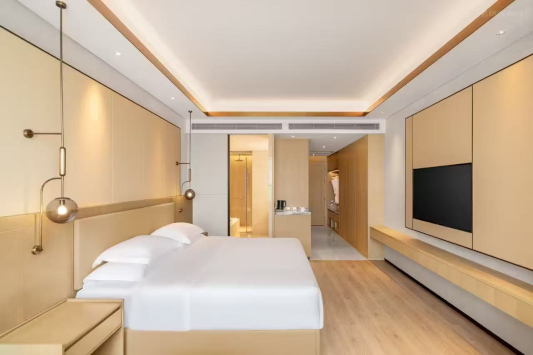 Room Type A
 Room Type B

Attractions in Changsha
Yuelu Mountain and Yuelu Academy
Explore the trails, paths and temples of this popular location, or visit Yuelu Academy, one of the four ancient seats of learning in China. Further information in English (1,2,3,4) and in Chinese here.
Juzhizhou (Orange Island)
Take the metro to Orange Island in the center of the xiang River, with ornamental gardens, pavilions and the Young Mao Zedong statue.
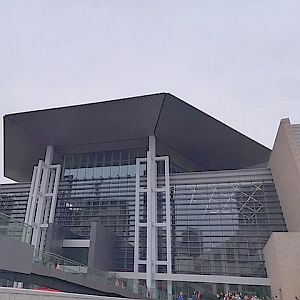
Hunan Provincial Museum
(click picture for official website, available in Chinese(Simplified and Traditional), English, French and Korean)